


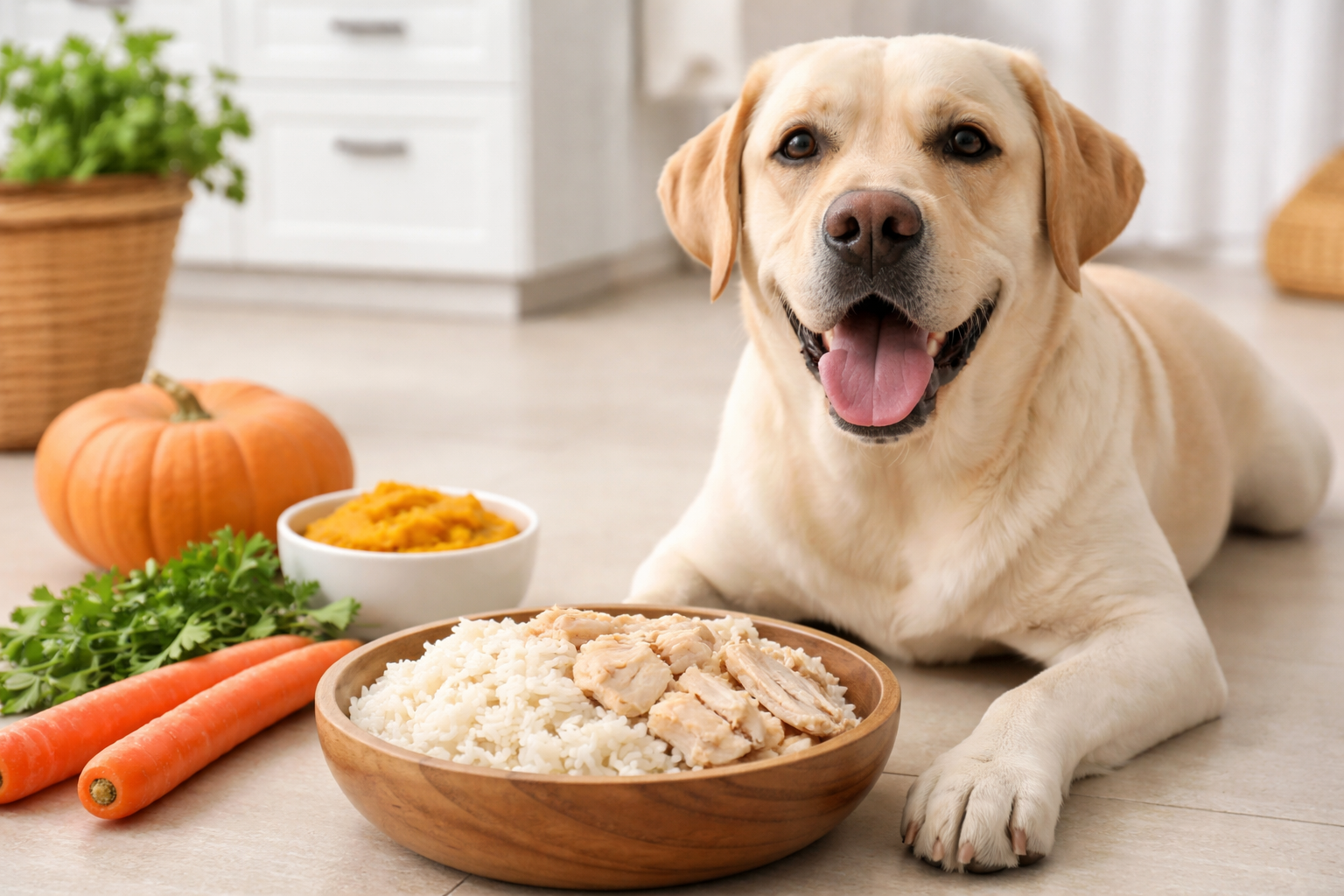
Digestive problems in dogs can appear suddenly and without warning. One day your dog is energetic and eating normally, and the next they’re dealing with diarrhea, vomiting, or a noticeable loss of appetite. These symptoms can be alarming for pet parents, especially when you’re unsure what foods are safe to offer during recovery. This is where a bland diet for dogs becomes an essential and vet-recommended solution.
A bland diet is often one of the first steps veterinarians suggest for mild gastrointestinal upset. It helps calm the digestive system, reduces irritation, and gives your dog’s stomach and intestines time to heal. Understanding what a bland diet is, when to use it, and how to feed it properly can make a significant difference in how quickly your dog feels better.
In this guide, we’ll break down everything you need to know about a bland diet for dogs, including ingredients, timing, portion sizes, safety tips, and common mistakes to avoid.
What Is a Bland Diet for Dogs?
A bland diet for dogs is a temporary meal plan made up of simple, easily digestible foods designed to reduce strain on the digestive system. Unlike regular dog food, which often contains fats, flavorings, and complex ingredients, a bland diet focuses on minimal components that are gentle on the stomach and intestines.
The primary goal of a bland diet is to allow the gastrointestinal tract to rest while still providing basic nutrition. It is not meant to be nutritionally complete or used long term. Instead, it acts as a short-term dietary reset that supports healing and stabilizes digestion during episodes of stomach upset.
Most bland diets for dogs consist of a lean protein paired with a simple carbohydrate. These ingredients are chosen because they digest quickly, produce less irritation, and help firm up stools while reducing nausea and vomiting.
A bland diet for dogs typically:
- Uses simple, low-fat ingredients
- Avoids spices, oils, and additives
- Is fed temporarily during digestive distress
- Helps normalize bowel movements
Why Do Veterinarians Recommend a Bland Diet?
Veterinarians frequently recommend a bland diet because it directly addresses the most common causes of short-term digestive upset in dogs. When the stomach or intestines are irritated, rich or complex foods can worsen symptoms and delay healing. A bland diet reduces digestive workload, allowing the gut lining to recover naturally.
This type of diet also helps regulate intestinal motility. When a dog has diarrhea, food moves too quickly through the digestive tract, preventing proper nutrient absorption. Bland foods slow this process, which can help stools return to normal consistency. For vomiting, bland foods reduce stomach acid production and are less likely to trigger nausea.
Because bland diets are simple and predictable, they also help veterinarians rule out food sensitivities or intolerances as a contributing factor.
Veterinary benefits of a bland diet include:
- Reduced gastrointestinal inflammation
- Improved stool consistency
- Less vomiting and nausea
- Faster digestive recovery
Common Ingredients in a Bland Diet for Dogs
The effectiveness of a bland diet depends heavily on using the right ingredients. Foods must be low in fat, mild in flavor, and easy to digest. Anything too rich or heavily processed can aggravate symptoms and slow recovery.
Lean proteins provide essential amino acids without excess fat, while simple carbohydrates supply easily digestible energy. These ingredients should always be cooked plainly, without salt, seasoning, butter, or oil.
The most commonly recommended ingredients have been used safely for decades and are widely accepted by veterinarians for short-term digestive support.
Common bland diet ingredients include:
- Boiled, skinless chicken breast
- Plain white rice (fully cooked)
- Boiled lean turkey
- Boiled white fish such as cod
- Plain canned pumpkin (100% pumpkin, no additives)
When Should You Use a Bland Diet for Dogs?
A bland diet should be used when your dog is experiencing mild to moderate digestive issues that do not require immediate veterinary intervention. It is most effective when symptoms are recent, your dog is still alert, and they are able to drink water.
This diet works best as an early response to stomach upset. Starting a bland diet promptly can often shorten the duration of symptoms and prevent further irritation. However, timing matters—waiting too long or using it in inappropriate situations may delay proper treatment.
Bland diets are commonly used for short-term conditions and are not intended for chronic digestive disorders unless directed by a veterinarian.
Situations where a bland diet is appropriate:
- Mild diarrhea lasting less than 48 hours
- Occasional vomiting without blood
- Soft or loose stools
- Temporary loss of appetite
- Mild gastroenteritis
- Stress-related digestive upset
Signs Your Dog May Benefit From a Bland Diet
Recognizing early signs of digestive discomfort can help you intervene before symptoms worsen. Dogs often show subtle changes before more obvious symptoms appear, such as changes in behavior or eating habits.
If your dog seems uncomfortable but is otherwise alert and responsive, a bland diet may help stabilize their digestion. Monitoring symptoms closely during this time is essential to ensure improvement.
Common signs that indicate a bland diet may help:
- Loose or watery stools
- Vomiting food or bile
- Decreased interest in regular food
- Stomach gurgling or gas
- Lethargy combined with digestive upset
When NOT to Use a Bland Diet
While a bland diet is helpful in many cases, there are situations where it is not appropriate and could delay necessary medical care. Severe or persistent symptoms often indicate a more serious underlying issue that requires veterinary attention.
Dogs with certain medical conditions may need prescription diets or medical treatment rather than home-prepared bland food. Ignoring warning signs can lead to dehydration, nutrient deficiencies, or worsening illness.
Do not rely on a bland diet if your dog has:
- Bloody diarrhea or vomit
- Severe or ongoing vomiting
- Diarrhea lasting more than 72 hours
- Fever or extreme weakness
- Signs of dehydration
- Suspected toxin ingestion
How Long Should a Dog Stay on a Bland Diet?
A bland diet is meant to be temporary. Most dogs show improvement within a few days, and remaining on a bland diet for too long can result in nutritional imbalances.
Once stools become firm and vomiting stops, it’s time to gradually reintroduce regular food. Rushing this process can cause symptoms to return, so a slow transition is essential.
Typical bland diet duration:
- 2–3 days for mild symptoms
- Up to 5 days for moderate digestive upset
How to Transition Back to Regular Dog Food
Transitioning back to normal food should always be done gradually. Even if your dog seems fully recovered, their digestive system may still be sensitive.
Mixing regular food with the bland diet over several days helps prevent relapse and allows the gut to adjust smoothly.
Recommended transition schedule:
- Day 1: 75% bland diet, 25% regular food
- Day 2: 50% bland diet, 50% regular food
- Day 3: 25% bland diet, 75% regular food
- Day 4: 100% regular food
Common Mistakes Pet Parents Make With a Bland Diet
Many well-meaning pet parents accidentally prolong digestive issues by making small but critical mistakes. Adding flavorings or feeding oversized portions can negate the benefits of a bland diet.
Keeping the diet simple and controlled is the key to success.
Mistakes to avoid include:
- Adding salt, spices, or oils
- Feeding fatty meats
- Overfeeding large portions
- Using a bland diet for too long
- Giving treats during recovery
Is a Bland Diet Right for Your Dog?
A bland diet for dogs is a safe, effective, and vet-recommended way to manage short-term digestive upset when used correctly. It helps calm the stomach, restore normal digestion, and support faster recovery without unnecessary medications.
Knowing when to use a bland diet—and when to seek veterinary care—empowers you to make confident, informed decisions for your dog’s health. If symptoms persist or worsen, always consult your veterinarian for further guidance.
Frequently Asked Questions (FAQs)
1. What is a bland diet for dogs?
A bland diet for dogs is a short-term feeding plan made with simple, low-fat, and easily digestible foods. It is commonly used to help soothe an upset stomach, reduce vomiting or diarrhea, and allow the digestive system to recover without irritation.
2. When should I put my dog on a bland diet?
You should consider a bland diet if your dog has mild diarrhea, occasional vomiting, soft stools, or a temporary loss of appetite. It is best used when symptoms are mild and your dog is still alert, drinking water, and not showing signs of severe illness.
3. How long should a dog stay on a bland diet?
Most dogs stay on a bland diet for about 2 to 5 days. Once symptoms improve and stools return to normal, you can slowly transition your dog back to their regular food. Prolonged use without veterinary guidance is not recommended.
4. What foods are included in a bland diet for dogs?
Common bland diet foods include boiled, skinless chicken breast, plain white rice, lean turkey, boiled white fish, and plain canned pumpkin. All foods should be cooked without seasoning, oil, butter, or salt.
5. Can I feed my dog only chicken and rice on a bland diet?
Yes, boiled chicken and white rice is one of the most commonly recommended bland diets for dogs. However, it should only be fed short-term, as it does not provide complete nutrition for long-term feeding.
6. How much bland food should I feed my dog?
Portion size depends on your dog’s weight and appetite. It’s best to feed smaller portions more frequently, dividing the daily amount into three or four meals to avoid overwhelming the digestive system.
7. Is a bland diet safe for puppies and senior dogs?
A bland diet can be safe for puppies and senior dogs, but extra care is needed. Puppies have higher nutritional needs, and senior dogs may have underlying conditions. Always consult a veterinarian before starting a bland diet for these age groups.
8. What are the signs that a bland diet is not working?
If your dog continues vomiting, has bloody diarrhea, becomes lethargic, refuses water, or shows no improvement after 48 hours, a bland diet may not be enough. These symptoms indicate the need for immediate veterinary care.
9. How do I transition my dog back to regular food after a bland diet?
Transition gradually by mixing regular food with the bland diet over several days. Start with mostly bland food and slowly increase the amount of regular food each day to prevent digestive upset from returning.
10. When should I call the vet instead of using a bland diet?
You should contact a veterinarian immediately if your dog has severe or persistent vomiting, bloody stool, fever, dehydration, weakness, or if symptoms last longer than 48 to 72 hours. A bland diet should never replace professional medical care in serious cases.