


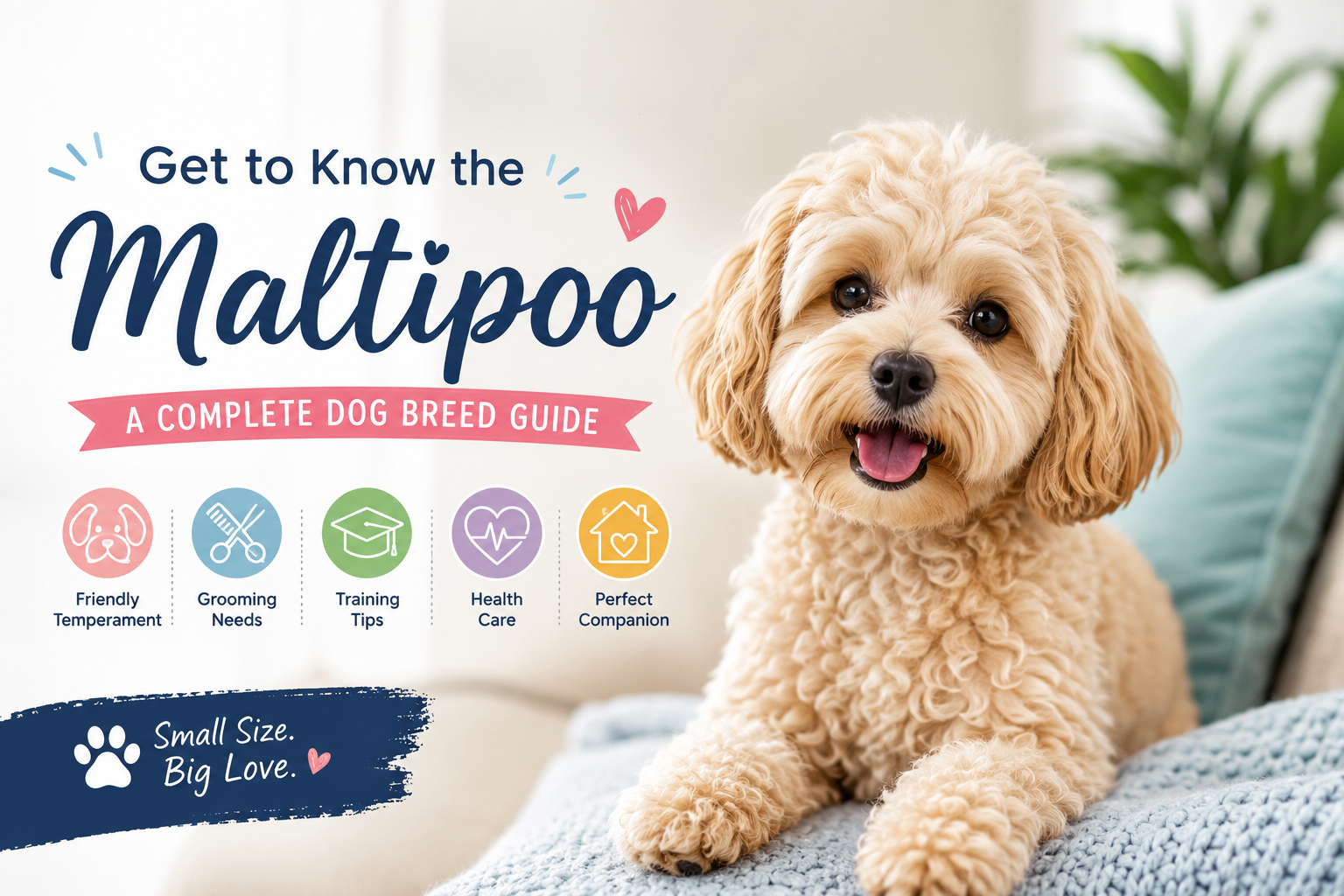
The Maltipoo has quickly become one of the most beloved designer dog breeds among families, singles, seniors, and first-time pet owners. Combining the affectionate nature of the Maltese with the intelligence of the Poodle, this charming companion dog offers the best qualities of both breeds in one adorable package.
Known for their playful personalities, low-shedding coats, and strong bond with their owners, Maltipoos have gained popularity around the world. Whether you are considering bringing a Maltipoo puppy home or simply want to learn more about this lovable breed, understanding their characteristics, care requirements, and temperament is essential.
This complete Maltipoo dog breed guide covers everything you need to know, from appearance and personality to training, grooming, health, and daily care.
What Is a Maltipoo?
A Maltipoo is a crossbreed created by mixing a Maltese with a Toy Poodle or Miniature Poodle. The goal of this pairing is to combine the intelligence and low-shedding coat of the Poodle with the affectionate and gentle nature of the Maltese.
Although the Maltipoo is not recognized as a purebred dog by major kennel clubs, it has become one of the most sought-after companion dogs due to its friendly temperament and adaptability. These dogs thrive in various living environments, including apartments, suburban homes, and even households with children and other pets.
Because they are a mixed breed, individual Maltipoos may inherit different traits from either parent. However, most share similar characteristics that make them excellent family companions.
Maltipoo Breed History
The Maltipoo originated in the United States during the growing popularity of designer dog breeds in the late twentieth century. Breeders aimed to create a companion dog that combined the best qualities of the Maltese and Poodle while minimizing shedding.
The Maltese itself has a history stretching back thousands of years and has long been cherished as a companion animal. The Poodle, originally bred for retrieving waterfowl, is renowned for its intelligence and trainability.
The combination of these two breeds resulted in a small dog with a loving personality, impressive intelligence, and a coat that many allergy-sensitive owners find easier to manage than some other breeds.
Maltipoo Appearance
One of the reasons people fall in love with Maltipoos is their irresistibly cute appearance. Their soft coats, expressive eyes, and compact size give them a teddy bear-like look that appeals to dog lovers of all ages.
Size and Weight
The size of a Maltipoo depends largely on whether a Toy Poodle or Miniature Poodle was used in breeding.
Most adult Maltipoos typically measure between 8 and 14 inches tall at the shoulder. Their weight generally ranges from 5 to 20 pounds, although most fall somewhere in the middle of that range.
Their small size makes them suitable for apartment living while still being sturdy enough to enjoy outdoor activities and family adventures.
Coat Types
Maltipoo coats can vary considerably. Some inherit the silky coat of the Maltese, while others develop curlier fur similar to a Poodle.
Common coat textures include:
- Soft and wavy
- Curly and dense
- Straight and silky
Regardless of texture, regular grooming is necessary to keep the coat healthy and free from tangles.
Coat Colors
Maltipoos come in a variety of attractive colors, including:
- White
- Cream
- Apricot
- Silver
- Black
- Brown
- Parti-color combinations
Many puppies experience slight color changes as they mature, especially those with Poodle genetics.
Maltipoo Temperament and Personality
The Maltipoo temperament is one of the breed’s strongest selling points. These dogs are known for being affectionate, friendly, and eager to spend time with their families.
They often form strong emotional bonds with their owners and enjoy being involved in daily activities. Many Maltipoos prefer being near people rather than spending long periods alone.
Family-Friendly Nature
Maltipoos are excellent family dogs when properly socialized. Their gentle personality allows them to interact well with respectful children, and they often enjoy participating in family routines.
Because of their small size, supervision is important around very young children who may accidentally handle them too roughly.
Relationship With Other Pets
Most Maltipoos get along well with other dogs and household pets. Early socialization helps them develop confidence and positive interactions with animals of different sizes.
Introducing them gradually and positively to other pets typically leads to successful long-term relationships.
Intelligence and Curiosity
The Poodle influence contributes significantly to the Maltipoo’s intelligence. These dogs learn quickly and often enjoy mental challenges such as puzzle toys, obedience exercises, and interactive games.
Their curiosity keeps them engaged with their surroundings and makes training sessions more productive.
Are Maltipoos Good for First-Time Dog Owners?
Maltipoos are frequently recommended for first-time dog owners due to their manageable size, affectionate nature, and trainability.
They generally respond well to positive reinforcement and do not require extensive exercise compared to larger working breeds. Their eagerness to please makes learning household rules and basic commands relatively straightforward.
However, prospective owners should understand that Maltipoos thrive on companionship and may struggle with long periods of isolation. Individuals who spend most of the day away from home should consider whether they can provide sufficient attention and interaction.
Training a Maltipoo
Training is an essential part of raising a well-behaved and confident Maltipoo. Fortunately, this breed usually enjoys learning and responds enthusiastically to rewards.
Start Early
Puppyhood is the ideal time to introduce basic training and socialization. Early experiences help shape behavior and build confidence in new environments.
Expose your Maltipoo to different people, sounds, locations, and situations while maintaining positive experiences.
Use Positive Reinforcement
Maltipoos respond exceptionally well to positive reinforcement techniques. Treats, praise, toys, and affection can motivate them to learn quickly.
Harsh corrections may damage trust and create anxiety, making training less effective.
House Training
House training can require patience, particularly with smaller breeds that have smaller bladders. Consistency, routine schedules, and frequent bathroom breaks significantly improve success rates.
Crate training often serves as a helpful tool during the house-training process.
Exercise Requirements
Although Maltipoos are energetic and playful, they do not require excessive exercise.
Most adults are satisfied with daily walks combined with indoor play sessions. Approximately thirty to sixty minutes of activity each day is generally sufficient for maintaining physical health and mental stimulation.
Activities that many Maltipoos enjoy include:
- Short neighborhood walks
- Interactive toys
- Fetch games
- Obedience training
- Puzzle feeders
Regular exercise helps prevent boredom, which can contribute to unwanted behaviors such as excessive barking.
Grooming and Coat Care
Proper grooming plays a major role in maintaining your Maltipoo’s comfort and appearance.
Brushing
Depending on coat type, brushing should occur several times each week. Curly coats often require daily attention to prevent matting and tangles.
Regular brushing also distributes natural oils throughout the coat and reduces debris buildup.
Bathing
Most Maltipoos benefit from bathing every three to four weeks. Using dog-specific shampoos helps preserve skin health and coat quality.
Overbathing may strip natural oils and lead to skin irritation.
Professional Grooming
Many owners schedule professional grooming appointments every six to eight weeks. Professional groomers can trim the coat, clean the ears, clip nails, and maintain overall coat condition.
Dental Care
Dental hygiene is especially important for small dog breeds. Daily brushing and regular veterinary dental evaluations help reduce the risk of periodontal disease.
Common Maltipoo Health Issues
Like all breeds, Maltipoos may be prone to certain health conditions. Responsible breeding and routine veterinary care help reduce risks and promote long-term wellness.
Patellar Luxation
This condition involves the kneecap moving out of its normal position. It is relatively common among small dog breeds and may vary in severity.
Dental Disease
Small breeds often experience dental problems due to crowded teeth. Consistent oral care significantly reduces the likelihood of gum disease and tooth loss.
Progressive Retinal Atrophy
This inherited eye condition can gradually affect vision. Regular veterinary examinations help monitor eye health throughout life.
Allergies
Some Maltipoos may develop environmental or food-related allergies. Symptoms can include itching, skin irritation, or digestive upset.
Hip Dysplasia
Although more common in larger breeds, hip dysplasia can occasionally affect Maltipoos, particularly larger individuals.
Regular veterinary checkups are essential for early detection and management of potential health concerns.
Feeding a Maltipoo
A balanced diet supports healthy growth, energy levels, and overall well-being.
The ideal food for a Maltipoo should contain high-quality protein sources, healthy fats, vitamins, and minerals. Portion sizes should reflect age, activity level, and body condition.
Puppies require more frequent meals than adults, while senior dogs may benefit from diets formulated specifically for aging pets.
Fresh water should always be available, and treats should be offered in moderation to prevent excessive weight gain.
Do Maltipoos Shed?
One of the most frequently asked questions about this breed concerns shedding.
Maltipoos are generally considered low-shedding dogs, particularly those that inherit more Poodle coat characteristics. However, no dog is completely non-shedding.
Their lower shedding level often appeals to owners who prefer a cleaner home environment and fewer loose hairs on furniture and clothing.
It is important to remember that individual dogs vary, and allergy sufferers should spend time around the breed before making a commitment.
Living With a Maltipoo
Maltipoos adapt well to many lifestyles because of their flexibility and affectionate personality.
They can thrive in apartments, condominiums, and larger homes as long as they receive adequate attention and exercise. Their moderate energy level makes them suitable for both active individuals and older adults seeking companionship.
Because they become strongly attached to their families, they are happiest when included in daily activities. Long periods of solitude can contribute to separation anxiety and unwanted behaviors.
Providing companionship, enrichment, and routine helps create a happy and well-adjusted Maltipoo.
Is a Maltipoo the Right Dog for You?
Choosing a dog should always involve careful consideration of lifestyle, schedule, and long-term responsibilities.
A Maltipoo may be an excellent choice if you want:
- A loving companion dog
- A relatively low-shedding breed
- A dog that learns quickly
- A pet suitable for smaller living spaces
- A family-friendly and sociable temperament
However, this breed may not be ideal for people who are frequently away from home or unable to commit to regular grooming and companionship.
Final Thoughts
The Maltipoo combines intelligence, affection, adaptability, and charm into one delightful companion. Their friendly nature, manageable size, and eagerness to please have made them one of the most popular designer dog breeds among families and individuals alike.
Whether you are searching for a playful puppy, a loyal companion, or a dog that fits comfortably into apartment living, the Maltipoo offers qualities that appeal to a wide range of pet owners. With proper training, grooming, nutrition, and veterinary care, a Maltipoo can become a cherished member of the family for many years.
Before bringing one home, take time to evaluate your lifestyle and ensure you can provide the attention and care this people-oriented breed deserves. For many households, the reward is a devoted companion that fills every day with affection, entertainment, and unconditional love.
Share Your Maltipoo Story with Petoppia
Do you have experience with the Maltipoo dog breed? Whether you have raised Maltipoo puppies, learned valuable Maltipoo training techniques, or discovered helpful Maltipoo care tips, we invite you to share your knowledge through a guest post on Petoppia.
We welcome original articles from dog owners, breeders, trainers, veterinarians, and pet enthusiasts. Topics can include Maltipoo grooming, nutrition, health, behavior, training, and real-life experiences that help readers better understand and care for this affectionate breed. Your insights could help current and future Maltipoo owners provide the best possible care for their furry companions.