


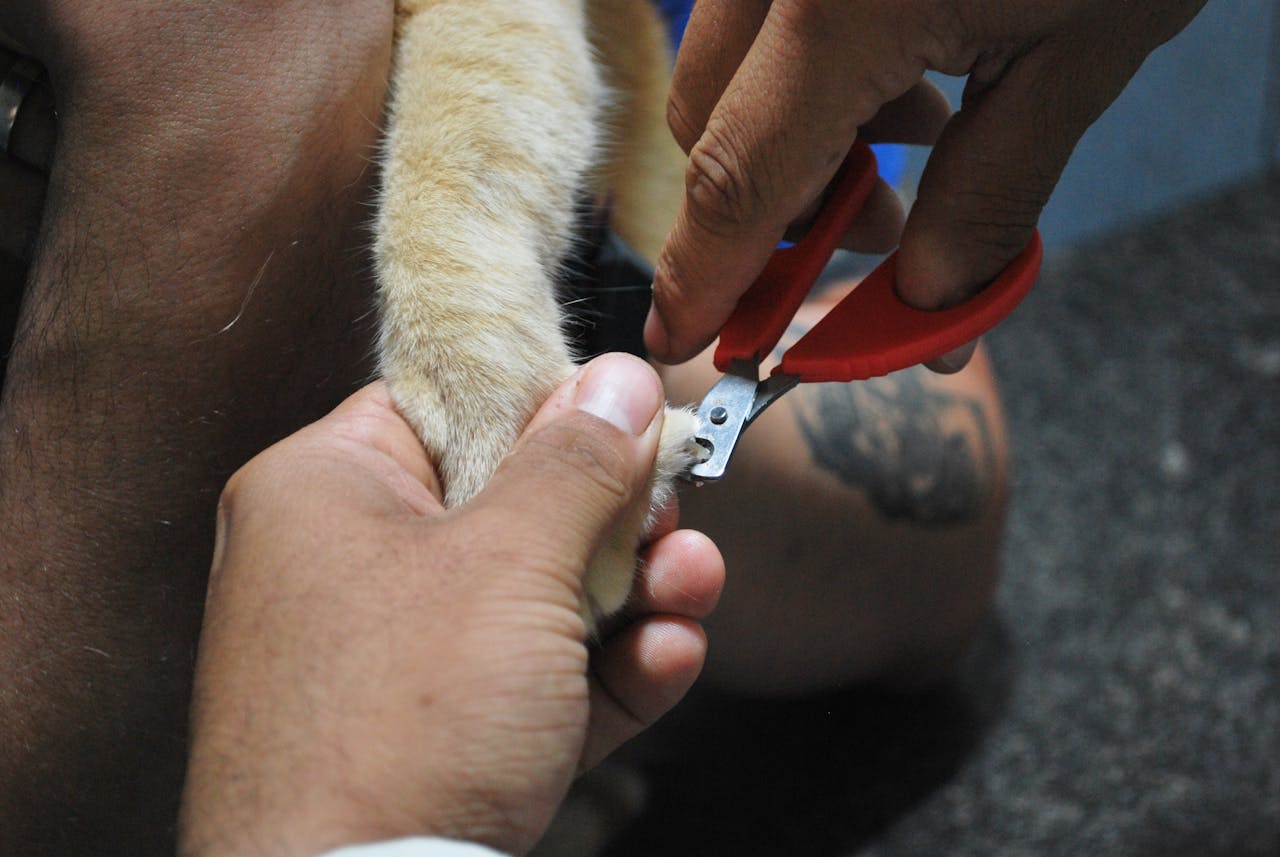
One crucial aspect of keeping your pet healthy is trimming their claws every two to three weeks. A simple cut can save your sofa, drapes, and other furniture and protect you, your family, and your pet.
Declawing, which requires surgical amputation and may result in behavioral and medical problems, is another quick and ineffective treatment option that may be substituted with nail cutting.
You only need to practice and have a little patience to become skilled at clipping a cat’s claws if the thought of doing so makes you bite your nails.
How Frequently Should Your Cat’s Nails Be Cut?
Cats kept indoors often require nail trimming every two weeks. While some older cats may only require nail trimming once a month, kittens’ nails might grow faster and must be done weekly. Cats kept outdoors may only require nail trimming a few times a year since they require sharper nails to protect themselves.
Tips for Cutting the Nails of Your Cat
As soon as you begin, make sure you have everything you’ll need nearby. In particular, if your cat dislikes having their nails clipped, you don’t want to have to break up your manicure routine.
To clip your cat’s nails, make sure you have these supplies on hand:
- Grinder or nail trimmer
- Cat food options include flour, cornstarch, or typtic powder (which is advised).
- Wrap your cat in a towel, if desired.
- An assistant, useful but not necessary
- Be patient and maintain your composure!
Select a Peaceful Area and a Cozy Position
Cutting your cat’s nails will be simpler if you trim them in a peaceful, non-scary section of your house, away from children, other pets, and loud noises. To assist your cat in staying relaxed and peaceful during the nail trim, spray the pheromone Feliway onto the blanket or area 15 minutes before.
You will eventually figure out how to hold your cat comfortably for both of you. Try these postures if you’re a beginner:
- Holding your cat lengthwise over your lap when seated
- Place your cat down on a level surface, such as a cushioned ironing board, where you don’t mind receiving scratches.
- Leaning back and holding the cat to your chest
- The cat should be seated with its face facing up in the space between your legs.
- You might test a few others until you discover a suitable position.
One approach to maintaining a firm grip on your squirmy cat is wrapping it in a towel like a burrito and letting only one paw come out at a time. This will make it more difficult for your cat to flee or scratch you. It’s all about knowing your cat, so do what seems right. However, for certain cats, this strategy may make them even more stressed.
Pull the Nail and Cut It
Take one of their paws once you and your cat have settled into a comfortable posture. Try your best to keep your cat’s paw in its natural posture without bending their leg awkwardly or folding it too far back or forth.
Pick a nail to work on first; any of them will work! Cats’ retractable claws mean that to lengthen their nails, you will need to gently press on the paw pad. Put your thumb on the tip of your toe and your forefinger on your cat’s paw pad with your non-dominant hand. Gently squeeze the nail to its maximum length, then mark the location of the quick so you know where not to cut.
45-Degree Angle Cutting
Cut off the tip of your cat’s nail with your clippers. Aim at a 45-degree angle instead than chopping straight through, so when your cat walks, the nail may rest gently on the ground. To cut the nail, use strong, decisive pressure; a softer, more cautious technique runs the risk of inadvertently crushing the nail instead of cutting it precisely.
Pro tip: To ensure you can see what you’re doing, make sure your cat’s long hair is pushed back and out of the way if it covers their paws. This is particularly crucial if you decide to use a nail grinder because that instrument has the ability to seize hair and pull firmly. (An additional justification to start with a different tool.)
Trim Carefully and Smartly
Trim your cat’s nail all the way to the tip, being careful not to clip the quick in the process. If you’re new to trimming, start off carefully and work your way up to taking out more hair in subsequent sessions. It’s preferable to start small and cause your cat upset by inadvertently removing too much at once.
Treats may be given to cats after each nail service to help them appreciate the experience more. Several cats really enjoy Cat Treats and Cat Food! However, some cats could object to rewards when their nails are being clipped. If your cat doesn’t eat while you’re doing it, you may hold onto the goodies until after you’re done cutting.
Accidents do occur. Try to maintain composure while you cut the quick; your cat could take after you and sit still long enough for you to finish cutting. Still, it’s okay to let up and try again another day if your cat seems too distressed to continue.
But, your cat will bleed and feel pain if you cut the quick. We all make mistakes occasionally, so don’t feel too horrible if you unintentionally nick the quick! A nail may quicken as a result of mishaps with sharp objects and your cat’s abrupt motions. Though flour or cornstarch work just as well in this situation, styptic powder is better for your cat. This is due to the fact that styptic powder, which includes the topical painkiller benzocaine, not only stops bleeding but also relieves pain. Flour or cornstarch just stops bleeding.
Remove the Remaining Claws from Your Cat
Trim each cat’s nail by following the previous procedure. Keep the dewclaws in mind! They are located somewhat higher up, similar to thumbs, on your cat’s front paws. Neglecting them can cause them to develop to the point where they protrude into their paw pad and coil around, which is undesirable.
Some cats may decide to just engage in this activity for a short while due to “kitty minutes.” You may easily halt your session and trim the remaining nails in a day or two if your cat becomes aggressive after you’ve clipped a few of them.
For your cat’s happiness, it is well worth breaking this work into smaller shifts. Reward your cat with lots of food, hugs, playing, or anything else that will make the nail trim experience enjoyable once you are done.
Conclusion
While each cat may respond to grooming sessions in a different way, our interactions with them during these stressful moments will reveal a lot about their experiences. Remind yourself that things will likely become a lot simpler if you remain composed and persistent.
Have you ever seen your cat, anxious to be free, attempt wildly to unhook a single jammed claw? Regular trimmings, however, can stop them, allowing your cat to play stress-free and uninhibited. It’s probable that your carpets and furnishings will benefit as well.