



More than 4.5 million dog bites take place annually in the United States. Far from being the result of a stray attacking someone in an open field or park, they tend to be in the home and from a household pet. The key to preventing them and ensuring that people and their four-legged companions are safe is understanding why they happen and how to prevent them.
Here, we will discuss why dog bites occur, dog bite treatment, how to prevent them, and what to do if you or the person next to you is bitten.
Why Do Dog Bites Occur?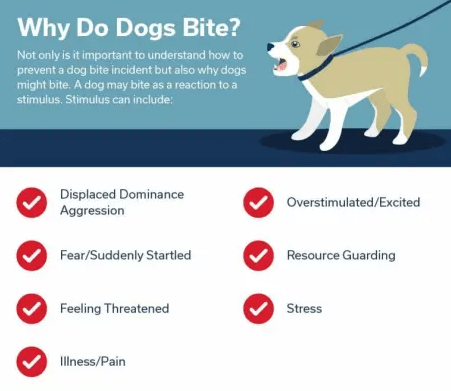
Dog biting can be caused by a variety of reasons including play errors, fear, fright, or territorial defense. Dogs bite when threatened, startled, or frightened, and most dog bites are inflicted on children, reports the American Veterinary Medical Association (AVMA). Children are also more likely to suffer serious injuries than adults.
Dr. Christopher Baugh, an associate professor of emergency medicine at Harvard Medical School, adds that individuals do not know that they are missing out on behavioral cues that a dog is anxious. A few dogs develop territorial behavior in the form of barking, growling, snapping, or lunging whenever a person comes near their territory. Other dogs will end up turning to resource guarding, where they get upset or fight for food, toys, or beds.
- Fear and Anxiety: Bitten by trapped or frightened dogs.
- Territorial Behavior: Territorially defensive dogs may defend their areas against intruders.
- Resource Guarding: Growling dogs and aggression if food, toys, or the bed comes in the way.
- Rough Play: Occasionally, bites occur out of play and often while engaging in tug-of-war or wrestling.
- Pain or Illness: A sick or hurt dog in pain may attack when handled.
General Dog Bite Prevention Tips
Any dog, no matter what breed or temperament, may bite under the right conditions. But then, there are a few healthy dog tips that you can use to minimize the danger.
- Never leave a young child unattended with a dog and no adult present.
- Make children respect dogs by not touching them roughly and watching for stress cues.
- Keep dogs away from eating, sleeping, or tending to puppies to avoid being attacked.
- Watch for warning signs like growling, rigid posture, and showing teeth.
- Use positive reinforcement techniques to teach dogs to be well-mannered and socialized.
Handling Strange Dogs
- Always ask the owner of a dog for permission before petting their dog, even if the dog is friendly.
- Allow the dog to smell and see you first before trying to pet it.
- Never approach fearful, aggressive, sick, or cowering dogs.
- If an approaching strange dog is aggressive, remain calm, stand sideways, do not look at it, and speak firmly and low in a “no” or “go home” voice.
Identifying Warning Signs in Dogs
- Stiffened posture
- Hair hackles
- Pinned back ears
- Growling or baring teeth
- Snapping or lunging
Knowing and understanding them can work far towards lessening the possibility of a bite.
Dog Bite Treatment Tips
Despite all precautions, bites from dogs are still possible. It is necessary to know what to do if bitten by a dog in order to prevent infection and complications.
Immediate Steps to Follow After a Dog Bite
- Clean the wound: Wash with mild soap and running water for at least five minutes.
- Stop bleeding: Apply pressure to the wound with a clean cloth or bandage.
- Apply an antiseptic: If there is an antiseptic solution available, use it to keep the area clean and prevent infection.
- Cover the wound: Use a sterile bandage to bandage the wound.
- Look for signs of infection: Redness, pus, swelling, or increased pain might be signs that an infection has developed.
When to Seek Medical Attention
You should seek medical attention if:
- The bite was deep, heavy, and bleeding to your face.
- You do not know if the dog is rabies-vaccinated.
- The wound is infected (redness, swelling, purulent discharge, or warmth).
- You have not had a tetanus shot within the last 10 years.
- You have underlying medical conditions, such as diabetes or a compromised immune system.
Urgent vs. Emergency Care
- For minor cuts, an urgent care center would be a good choice.
- If there is severe bleeding, a break, or a deep wound, go directly to the emergency room.
- Some bites can be stitched, preferably within 12-24 hours.
- If the dog is a stray or unknown, rabies post-exposure prophylaxis might be necessary.
What to Do with the Dog
- Get the owner’s contact information and check if the dog is up to date on its vaccinations.
- If bitten by a stray or unknown dog, report it to animal control.
- If the dog is your friend or family member, speak to the person calmly and responsibly so that this will never occur in the future.
Conclusion
Dog bites are a problem, but one that can be avoided by education and good pet responsibility. If we understand how to behave around dogs, respect them, and train children and adults in safe interactions, we can significantly reduce the risk of being bitten.
In the event that a bite occurs, early and appropriate action will avoid complications. Always be safe, and where in doubt, seek medical counsel early.