


If your dog suddenly starts scooting across the carpet, licking underneath their tail, or leaving behind an unmistakable fishy smell, you may be dealing with an anal gland problem.
It is not exactly the most pleasant part of dog ownership, but anal gland health is something pet parents should understand. While many dogs empty their anal sacs naturally when they poop, some dogs have recurring problems with blocked or poorly emptying glands.
This is where anal gland supplements for dogs may have a role.
Most products marketed for anal gland support focus on one simple idea: improving stool quality and increasing fiber intake so that firm, well-formed stools can place enough natural pressure on the anal sacs during bowel movements.
But supplements are not a universal solution, and they should not replace veterinary treatment when a dog has an infection, abscess, severe inflammation, or an impacted gland.
So, what should you look for in an anal gland supplement, and which types may be worth considering?
Let’s take a closer look.
What Are Anal Glands in Dogs?
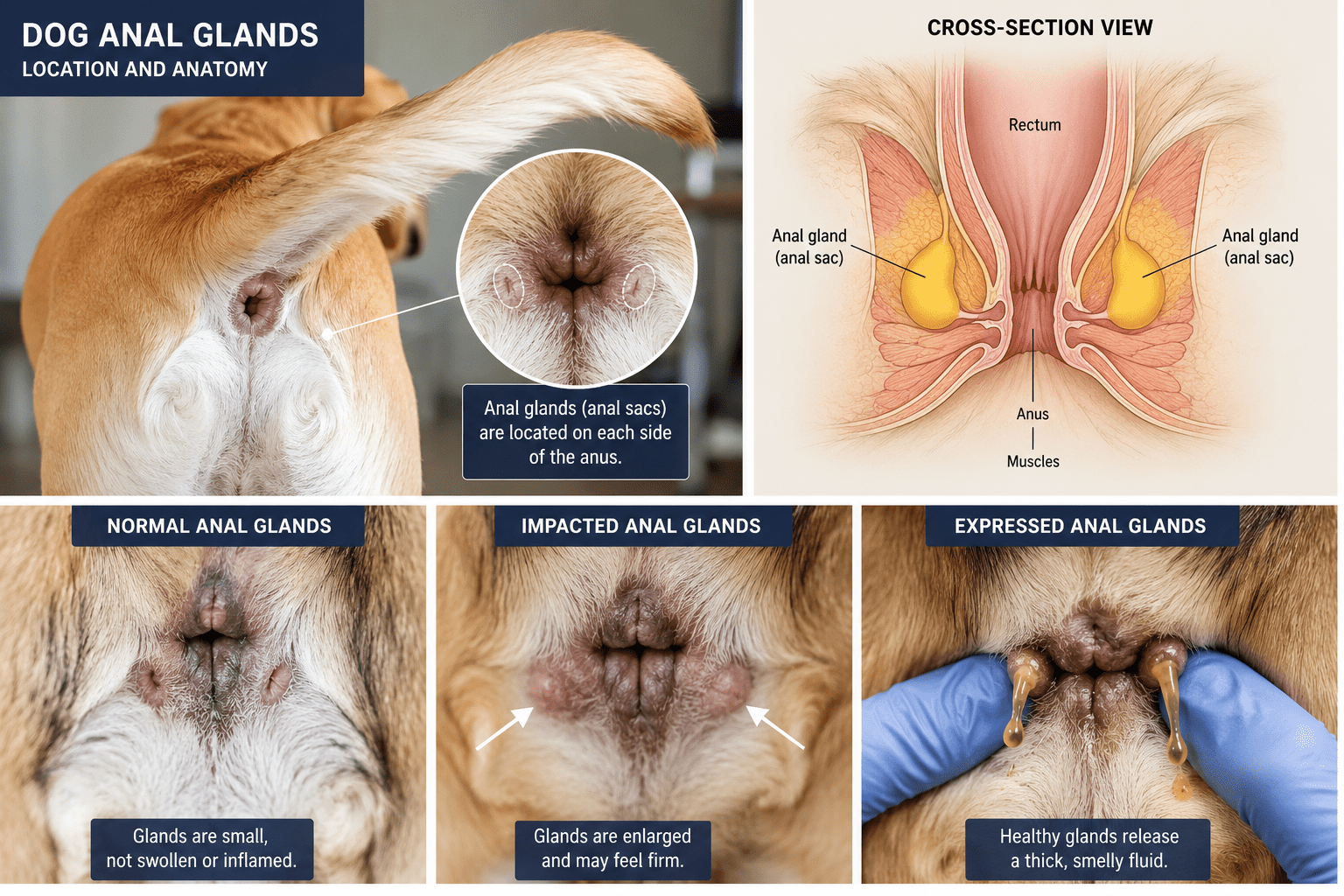
What people commonly call a dog’s “anal glands” are actually anal sacs. Dogs have two small sacs positioned on either side of the anus.
These sacs contain a strong-smelling fluid that is normally released when a dog passes stool. The pressure created during a bowel movement can help empty the sacs naturally.
For most dogs, this happens without their owners ever noticing.
Problems can develop when the sacs do not empty properly. Their contents may become thicker and accumulate, eventually causing an impaction. Continued blockage can result in irritation, inflammation, infection, or an abscess.
That is why recurring scooting should not automatically be treated as a simple “supplement problem.”
Why Do Some Dogs Have Anal Gland Problems?
There is no single reason why a dog develops anal gland trouble.
Some dogs simply appear to be more prone to recurring anal sac issues. Small dogs are commonly affected, although larger breeds can develop them too.
Possible contributing factors include:
- Soft or poorly formed stools
- Chronic diarrhea
- Constipation
- Changes in diet
- Food sensitivities or allergies
- Being overweight
- Inflammation around the anal area
- Anatomical differences
- Previous anal gland problems
If your dog repeatedly develops problems despite having good-quality stools, your veterinarian may need to investigate an underlying cause rather than simply increasing fiber.
What Are the Signs of an Anal Gland Problem?
Scooting is one of the most recognizable signs, but it is not the only one.
Watch for:
- Repeatedly dragging the rear across the floor
- Excessive licking or chewing around the anus
- Redness or irritation
- Swelling near the anus
- A strong fishy odor
- Sudden discomfort when sitting
- Difficulty passing stool
- Fluid leaking from the anal area
- Blood or pus around the anus
- Changes in normal behavior because of discomfort
A small amount of odor by itself does not necessarily mean there is a serious problem. But persistent or worsening symptoms deserve attention.
When Should You Take Your Dog to the Vet?
This is one area where supplements should never be used as a substitute for professional care.
Contact your veterinarian if your dog has significant swelling, obvious pain, bleeding, pus, a suspected abscess, or persistent symptoms.
An impacted anal sac may require professional expression. An infection may require additional treatment.
In rare cases, growths or tumors can also affect the anal sacs. That is another reason persistent or unusual symptoms should not simply be treated at home with supplements.
Should You Express Your Dog’s Anal Glands at Home?
It is tempting to try to solve the problem yourself, particularly if your dog has had anal gland issues before.
However, anal sac expression is not something every pet parent should attempt without proper instruction.
Incorrect or excessive manipulation can cause irritation or injury, and it may not address the underlying problem.
If your dog frequently needs their anal sacs emptied, talk with your veterinarian about why this is happening and whether changes to diet, stool quality, weight, allergies, or other aspects of their care could help.
How Can Anal Gland Supplements Help Dogs?
The main reason fiber appears so often in anal gland supplements is fairly straightforward.
Fiber can increase stool bulk and help create well-formed bowel movements.
A larger, appropriately firm stool may put more pressure on the anal sacs as it passes through the rectum. This can support their natural emptying.
That does not mean that more fiber is always better.
Too much fiber, especially when introduced suddenly, can cause gas, loose stools, constipation, or changes in bowel habits. The right amount depends on the individual dog, their existing diet, size, health, and digestive tolerance.
Some supplements go beyond fiber and include ingredients such as:
- Pumpkin
- Psyllium husk
- Flaxseed
- Apple fiber or pectin
- Prebiotics
- Probiotics
- Digestive enzymes
- Other ingredients intended to support digestive health
The important point is that an anal gland supplement is generally intended to support normal bowel movements and anal sac function, rather than physically empty an already blocked gland.
What Should You Look for in an Anal Gland Supplement?
Walking through the pet supplement aisle can be confusing because products often make very similar claims.
Rather than choosing a product simply because it says “anal gland support” on the label, look at what is actually inside it.
1. A Useful Source of Dietary Fiber
Fiber is the primary ingredient category worth paying attention to.
Common sources include pumpkin, psyllium, flaxseed, beet pulp, apple fiber, and other plant-based fibers.
A combination of soluble and insoluble fiber may be useful because different types of fiber behave differently in the digestive tract.
2. Digestive Support
Some formulas include probiotics, prebiotics, enzymes, or other digestive-support ingredients.
These additions may make a product more comprehensive, but they do not automatically make it better for every dog.
If your dog’s main issue is poorly formed stool, the most important consideration may simply be finding an appropriate way to improve stool consistency.
3. Appropriate Dosage Information
A good supplement should clearly explain how much to give based on your dog’s weight or size.
Avoid guessing the dose based on the size of the chew or assuming that doubling the amount will produce better results.
More is not necessarily better when it comes to dietary fiber.
4. A Form Your Dog Will Actually Eat
This sounds obvious, but it matters.
Anal gland supplements are often available as soft chews, powders, or other formulations. A supplement that your dog refuses to eat is not particularly useful.
Choose something that fits naturally into your dog’s feeding routine.
5. Transparent Ingredient Information
Look for a product with a clearly listed ingredient panel rather than relying entirely on marketing claims.
If your dog has known food allergies or sensitivities, check every ingredient before introducing a new supplement.
4 Types of Anal Gland Supplements Dog Owners May Consider
There is no single supplement that is right for every dog. Instead of treating one product as the universal “best,” it is more useful to understand the different formulations available.
1. High-Fiber Anal Gland Chews
These are among the most common options.
They typically combine several fiber sources designed to increase stool bulk and support regular bowel movements. Some also include digestive-support ingredients.
Best suited for: Dogs whose veterinarian believes improved stool bulk may help with recurring anal sac problems.
Potential downside: Introducing a large amount of fiber too quickly can cause digestive upset.
2. Pumpkin-Based Supplements
Pumpkin is a familiar source of dietary fiber and is included in many canine digestive supplements.
Some dogs tolerate pumpkin well, while others may experience changes in stool when too much is added.
Best suited for: Pet parents looking for a straightforward fiber-containing approach.
Potential downside: Portion and fiber content still matter. “Natural” does not automatically mean unlimited.
3. Psyllium-Based Supplements
Psyllium is a soluble fiber that absorbs water and can influence stool consistency.
Because psyllium can significantly affect bowel movements, it should be introduced carefully and with appropriate hydration.
Best suited for: Dogs that may benefit from additional soluble fiber under veterinary guidance.
Potential downside: Too much can contribute to excessively firm stools or constipation.
4. Fiber + Probiotic Formulas
Some products combine fiber with probiotics or prebiotics.
The idea is to address both stool quality and digestive support in one product.
Best suited for: Dogs whose veterinarian believes digestive health and stool consistency both need attention.
Potential downside: More ingredients do not necessarily mean better results for an individual dog.
Can Anal Gland Supplements Prevent Scooting?
They may help some dogs, but there is an important distinction.
A supplement may support healthier stool consistency, but it cannot guarantee that your dog will never have another anal gland problem.
Scooting has several possible causes. A dog may scoot because of anal sac irritation, parasites, allergies, skin problems, diarrhea, or another source of discomfort.
If your dog is scooting frequently, the first step should be determining why.
Once an underlying problem has been addressed, a veterinarian may recommend dietary changes or a fiber supplement as part of longer-term management.
How to Introduce an Anal Gland Supplement
If your veterinarian recommends a fiber supplement, introduce it gradually rather than immediately giving the full amount.
A sudden increase in dietary fiber can cause:
- Gas
- Loose stools
- Changes in bowel frequency
- Constipation
- Abdominal discomfort
Follow the product’s feeding instructions and your veterinarian’s recommendation.
Fresh water should always be available, particularly when increasing dietary fiber.
Keep an eye on your dog’s stool during the first several days. The goal is generally a healthy, well-formed stool—not extremely hard stool.
Can You Use Pumpkin Instead of an Anal Gland Supplement?
Sometimes plain pumpkin can be used as a source of dietary fiber, but it is not automatically equivalent to a formulated anal gland supplement.
The fiber concentration and ingredients differ between products, and the amount appropriate for one dog may not be appropriate for another.
If you want to add pumpkin to your dog’s food, use plain pumpkin rather than pumpkin pie filling, which can contain added sugar, spices, or other ingredients that dogs do not need.
Ask your veterinarian how much is appropriate for your dog’s size and diet.
What If Your Dog Still Has Problems After Taking a Supplement?
Do not simply keep increasing the dose.
If your dog continues scooting, licking, or developing recurrent anal gland problems, there may be another issue that needs attention.
Your veterinarian may consider factors such as:
- Food allergies or sensitivities
- Chronic diarrhea
- Poor stool consistency
- Constipation
- Weight management
- Skin allergies
- Parasites
- Recurrent infections
- Anal sac anatomy
- Other medical conditions
A supplement can be one part of a management plan, but it should not become a way of masking recurring symptoms.
Are Anal Gland Supplements Safe for Dogs?
Many dogs tolerate fiber-based supplements well when they are introduced appropriately.
However, “supplement” does not automatically mean risk-free.
Your dog may react to an ingredient, experience digestive upset, or develop constipation if the product is used incorrectly.
It is particularly important to speak with your veterinarian before adding a supplement if your dog:
- Takes prescription medication
- Has a chronic digestive condition
- Has recurring anal gland infections
- Has a history of constipation
- Is pregnant or nursing
- Has known food allergies
- Is on a veterinary-prescribed diet
Always follow the product label and your veterinarian’s instructions.
Frequently Asked Questions
What is the best supplement for dogs with anal gland problems?
There is no single best supplement for every dog. Fiber-based products are commonly used to support stool bulk and natural anal sac emptying, but the right choice depends on your dog’s diet, stool quality, medical history, and the reason for their recurring problems.
Do anal gland supplements really work?
They may help some dogs, particularly when recurring anal sac problems are associated with stool that is too soft or lacks sufficient bulk. However, supplements cannot treat every cause of anal gland disease and should not replace veterinary treatment.
What ingredient is best for anal glands in dogs?
Fiber is the key ingredient to look for. Products may contain sources such as pumpkin, psyllium, flaxseed, beet pulp, or other dietary fibers. The appropriate type and amount depend on the individual dog.
How long does it take for an anal gland supplement to work?
The timing varies depending on the product and the dog. Changes in stool consistency may occur relatively quickly, but recurring anal gland problems may require longer-term dietary management and veterinary monitoring.
Can I give my dog pumpkin for anal glands?
Plain pumpkin can provide dietary fiber and may help support healthy stool consistency. However, it should be used in an appropriate amount and should not be considered a replacement for veterinary care when a dog has an impacted or infected anal sac.
Is scooting always caused by anal glands?
No. Dogs can scoot because of allergies, parasites, skin irritation, diarrhea, constipation, or other problems affecting the area around the anus. Persistent scooting should be investigated rather than automatically treated as an anal gland issue.
How can I prevent anal gland problems in my dog?
Maintaining healthy stool consistency, feeding an appropriate diet, keeping your dog at a healthy weight, managing allergies and digestive problems, and following your veterinarian’s recommendations can all help reduce the risk of recurring problems.
Final Thoughts
Anal gland problems are uncomfortable for dogs and frustrating for their owners, but understanding what is happening can make them easier to manage.
For dogs that repeatedly struggle with anal sac issues, fiber may be an important part of the solution because well-formed, appropriately bulky stools can support natural emptying during bowel movements.
Anal gland supplements can provide a convenient way to add fiber and, depending on the formula, other digestive-support ingredients to a dog’s routine.
But they are not a cure-all.
If your dog is repeatedly scooting, licking their rear, developing swelling, or showing signs of pain, start with a veterinary examination rather than simply reaching for a supplement. Once more serious causes have been ruled out, your veterinarian can help determine whether additional fiber, a diet change, weight management, or another strategy makes sense for your dog.
At Petoppia, we believe that understanding the reason behind a pet health problem is just as important as finding a product that claims to solve it. A thoughtful approach can help you make better decisions about your dog’s everyday health and comfort.