


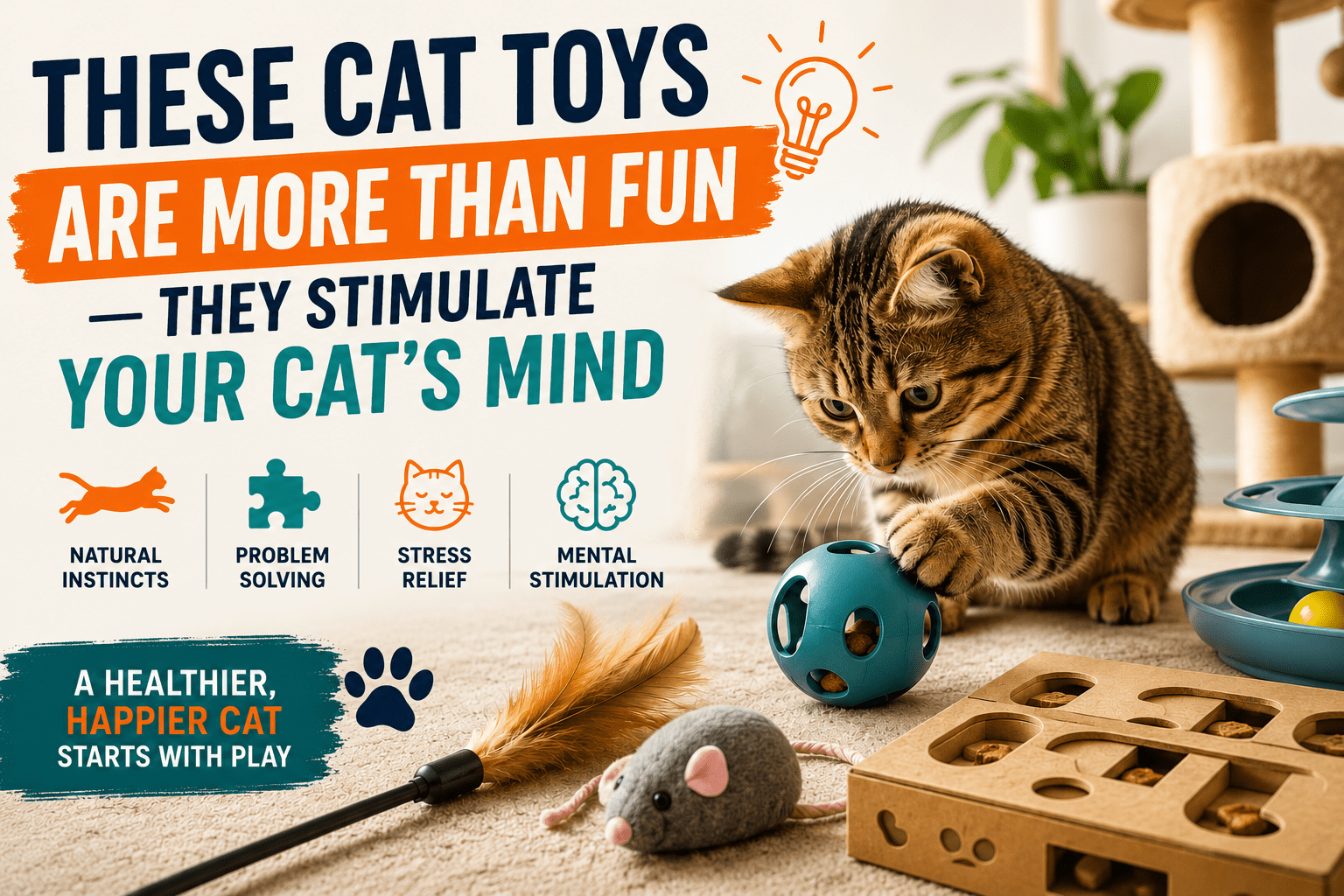
Cats may spend hours sleeping in quiet corners of the house, but their minds are naturally active and curious. Even indoor cats carry instincts that push them to hunt, chase, explore, and solve problems. When these instincts are ignored, cats can become bored, stressed, overweight, or destructive around the home. That is why choosing the right cat toys is not only about entertainment. It is also about supporting your cat’s mental and emotional health every day.
Mental stimulation for cats is just as important as physical activity. Interactive cat toys, puzzle feeders, motion toys, and sensory play items can help cats stay alert, confident, and emotionally balanced. A stimulated cat is often more playful, affectionate, and less likely to develop behavioral problems caused by boredom.
Many veterinarians and feline behavior experts now encourage regular enrichment activities for indoor cats. According to the American Association of Feline Practitioners, environmental enrichment plays an important role in reducing stress and improving feline well-being.
This guide explains how mentally stimulating cat toys work, why they matter, and which types of toys can help keep your cat healthy and engaged throughout every stage of life.
Why Mental Stimulation Matters for Cats
Cats are natural hunters. In the wild, they spend large portions of their day stalking prey, climbing, searching for food, and exploring new environments. Indoor life may keep cats safe from outdoor dangers, but it can also remove many opportunities for natural mental engagement.
Without enough stimulation, some cats begin showing signs of frustration or anxiety. They may scratch furniture excessively, overeat, wake owners at night, or become withdrawn and inactive. In homes with multiple pets, boredom can even increase tension and territorial behavior.
Mental stimulation helps recreate some of the challenges cats would naturally experience outdoors. Toys that encourage problem-solving, chasing, and exploration activate important parts of a cat’s brain. This type of activity can improve confidence, reduce stress, and support emotional balance.
Research published by the Ohio State University Indoor Pet Initiative also highlights the importance of enrichment activities for reducing stress-related behaviors in indoor cats.
Cats that receive regular enrichment often appear more relaxed and satisfied in their environment. They also tend to maintain healthier body weight and stronger physical coordination over time.
How Interactive Cat Toys Stimulate the Brain
Not every toy provides meaningful mental engagement. Some toys entertain cats briefly but fail to challenge their instincts or curiosity. Interactive cat toys are different because they encourage cats to think, react, and adapt during play.
These toys often mimic movement patterns similar to prey animals. Fast movements, hidden objects, and unpredictable motion trigger a cat’s hunting instincts and force them to stay mentally alert. Puzzle toys take this stimulation even further by requiring cats to solve simple challenges before receiving treats or rewards.
The process of figuring out how a toy works can be highly rewarding for cats. It creates a sense of accomplishment while reducing boredom. Mental exercises can also slow cognitive decline in older cats and help anxious cats redirect nervous energy into healthy activity.
When cats actively engage their senses during play, they experience more than simple entertainment. They experience a form of enrichment that supports emotional and mental wellness.
Best Types of Cat Toys for Mental Stimulation
Puzzle Feeders and Treat Toys
Puzzle feeders are among the best toys for stimulating a cat’s mind. Instead of eating directly from a bowl, cats must interact with the toy to release food or treats. This process mimics natural hunting behavior and encourages problem-solving.
Many cats become highly focused while working through food puzzles. Even simple puzzle toys can keep cats occupied for extended periods while slowing down fast eating habits. This can also help overweight cats maintain healthier feeding routines.
Treat-dispensing balls, rotating food mazes, and hidden compartment puzzles are popular choices for indoor cats. These toys encourage patience and concentration while adding excitement to mealtime.
Wand Toys and Feather Teasers
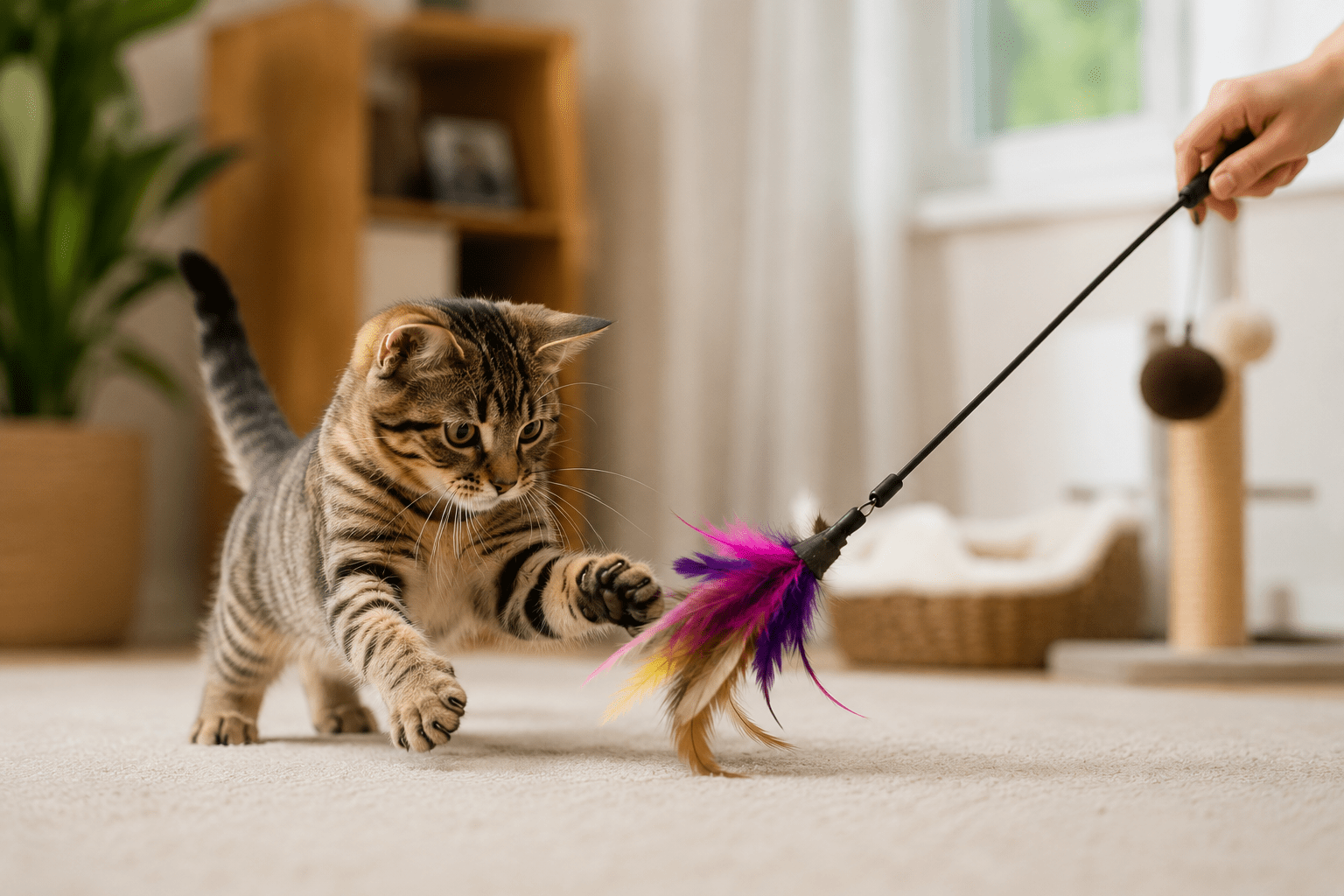
Wand toys remain one of the most effective ways to stimulate a cat physically and mentally at the same time. The unpredictable movement of feathers, ribbons, or plush attachments activates a cat’s prey drive and encourages stalking behavior.
Unlike passive toys, wand toys involve interaction between the cat and owner. This strengthens trust and creates positive bonding experiences. Cats must observe movement carefully, predict direction changes, and react quickly during play sessions.
Rotating different wand attachments regularly helps prevent boredom. Some cats prefer bird-like movements, while others respond more strongly to crawling or darting motions along the floor.
Motion-Activated Toys
Motion-activated cat toys introduce unpredictability into play. These toys may light up, roll unexpectedly, vibrate, or move when touched. Because cats cannot fully predict the toy’s behavior, they remain mentally engaged longer.
These toys work especially well for cats left alone during the day. Motion toys can encourage independent activity while reducing loneliness and inactivity.
However, balance is important. Some highly sensitive cats may become overstimulated by noisy or aggressive movement. Choosing toys that match your cat’s personality helps create a more enjoyable experience.
Cat Tunnels and Hideouts
Mental stimulation is not always about chasing or solving puzzles. Exploration and environmental control are also important for feline confidence and emotional security.
Cat tunnels, pop-up tents, and hiding spaces allow cats to explore safely while satisfying natural instincts to hide and observe surroundings. These spaces can become important comfort zones for shy or anxious cats.
Many cats enjoy combining tunnels with interactive play sessions. Wand toys moving through tunnel openings can create exciting hunting scenarios that encourage physical movement and strategic thinking.
Climbing Trees and Vertical Play Structures
Cats naturally seek elevated spaces because height provides safety and visibility. Cat trees and climbing shelves give indoor cats opportunities to explore vertical territory and observe their environment from above.
Multi-level climbing systems stimulate both physical coordination and mental curiosity. Cats often use climbing structures for exercise, observation, resting, and territory management.
Adding hanging toys or hidden treats to climbing structures increases engagement further. Rotating the setup occasionally can also renew interest and encourage exploration.
Why Indoor Cats Need More Enrichment
Indoor cats often live longer lives than outdoor cats because they face fewer dangers such as traffic, predators, and disease exposure. However, indoor environments can become repetitive without proper enrichment.
The same rooms, furniture, and routines every day may lead to boredom over time. Cats that do not receive enough stimulation sometimes create their own entertainment through destructive scratching, excessive vocalization, or aggressive play.
Mentally stimulating cat toys help replace some of the variety and challenge missing from indoor life. Even short daily play sessions can improve mood and reduce stress-related behaviors.
Indoor enrichment becomes especially important for single-cat households where social interaction may be limited. Toys provide an outlet for energy and help cats remain emotionally balanced even when owners are busy.
Signs Your Cat May Need More Mental Stimulation
Many behavioral problems are actually signs of boredom or under-stimulation. Recognizing these signs early can help owners improve a cat’s environment before stress becomes more serious.
A cat that constantly begs for attention, knocks objects off shelves, or attacks ankles unexpectedly may simply need more mental engagement. Overeating and excessive sleeping can also indicate lack of stimulation.
Some cats show boredom through destructive scratching or obsessive grooming habits. Others become withdrawn and inactive, spending most of the day hiding or avoiding interaction.
Introducing new toys, rotating play routines, and increasing environmental enrichment often improves these behaviors significantly. Cats thrive when their minds stay active and challenged.
How Often Should You Play With Your Cat?
Many cat owners assume cats entertain themselves naturally, but regular interaction remains important. Short but consistent play sessions can greatly improve a cat’s emotional health.
Most cats benefit from at least two interactive play sessions daily. Sessions lasting fifteen to twenty minutes often provide enough stimulation to release energy and satisfy hunting instincts.
Timing also matters. Cats are naturally most active during early morning and evening hours. Scheduling play during these periods often creates stronger engagement and excitement.
Consistency helps cats develop healthier routines. Regular mental stimulation may also improve sleep patterns and reduce nighttime restlessness.
Rotating Toys Helps Prevent Boredom
One common mistake cat owners make is leaving every toy available all the time. Even highly stimulating toys lose excitement when they become too familiar.
Rotating toys every few days helps maintain curiosity and novelty. Putting some toys away temporarily makes them feel new again when reintroduced later.
This strategy also allows owners to observe which toys create the strongest engagement. Some cats prefer fast-moving toys, while others enjoy quiet puzzle-solving activities.
Changing play styles regularly keeps enrichment fresh and prevents cats from losing interest in their environment.
Choosing Safe Toys for Your Cat
Safety should always come first when selecting cat toys. Small detachable parts, loose strings, and fragile materials can create choking or digestive hazards if swallowed.
Choose toys made from durable pet-safe materials whenever possible. Supervised play is especially important with feather toys, strings, or electronic moving parts.
It is also important to match toys to your cat’s personality and energy level. Some cats enjoy energetic hunting games, while others prefer slower exploration and puzzle activities.
Observing your cat’s reactions helps create a safer and more rewarding play experience.
The Emotional Benefits of Enrichment Play
Mental stimulation supports more than physical health. Enrichment activities can strengthen emotional stability and improve a cat’s overall quality of life.
Cats that feel mentally engaged often appear more confident and relaxed. Interactive play also strengthens trust between cats and owners by creating positive shared experiences.
Play sessions help reduce stress hormones while providing healthy emotional outlets for energy and frustration. This becomes particularly important in multi-cat homes where competition and territorial tension may develop.
For rescue cats or naturally anxious cats, mentally stimulating toys can provide comfort and confidence through predictable routines and rewarding challenges.
Conclusion
Cat toys are no longer simple distractions tossed across the floor for temporary amusement. The best toys engage a cat’s instincts, encourage problem-solving, and support emotional well-being in meaningful ways. Mental stimulation has become an essential part of responsible cat care, especially for indoor cats living in controlled environments.
Interactive toys, puzzle feeders, climbing structures, and enrichment games all contribute to a healthier and more balanced lifestyle for cats. They reduce boredom, encourage activity, and help prevent many stress-related behaviors that develop when cats lack engagement.
Every cat has unique preferences, which means discovering the right combination of toys may take time. However, the effort is worthwhile because a mentally stimulated cat is often happier, healthier, and more connected to its environment. Small daily changes in play and enrichment can make a lasting difference in your cat’s physical and emotional health.