


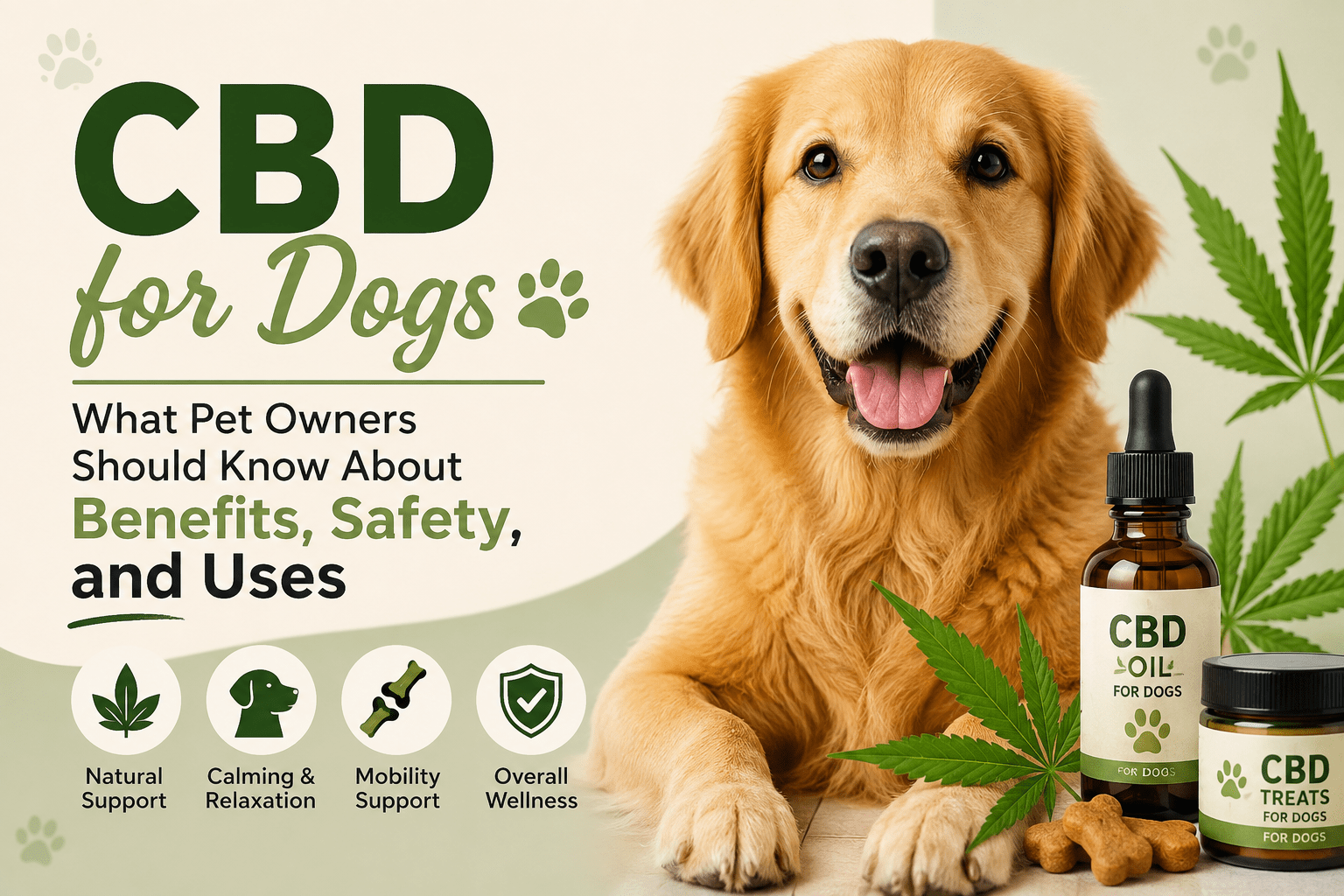
CBD has become increasingly popular among pet owners looking for different ways to support their dogs’ overall comfort and well-being. You may have seen CBD oils, chews, treats, and other products marketed specifically for dogs, particularly for issues such as stress, anxiety, and age-related discomfort.
But does CBD actually help dogs? Is CBD safe for dogs? And what should you know before giving a CBD product to your pet?
The answer is more complicated than many product labels suggest.
CBD, short for cannabidiol, is a compound found in cannabis and hemp plants. Unlike THC, CBD does not produce the intoxicating “high” associated with marijuana. However, research into CBD use in dogs is still developing, and CBD products marketed for pets have not been approved by the U.S. Food and Drug Administration (FDA) for treating medical conditions in animals.
That means pet owners should approach CBD carefully rather than assuming that a product labeled “natural” is automatically safe or effective.
In this guide, we’ll explain what CBD is, why some dog owners consider it, what the current evidence tells us, potential safety concerns, and what to discuss with your veterinarian before trying it.
What Is CBD for Dogs?
CBD, or cannabidiol, is one of the naturally occurring compounds found in cannabis plants.
CBD is different from THC, the compound primarily responsible for the intoxicating effects of marijuana. A CBD product can be made from hemp or other cannabis-derived sources, and products marketed for pets may come in several forms, including oils, tinctures, chews, treats, capsules, and topical products.
CBD products made specifically for dogs are marketed for a variety of purposes. Some products are promoted for relaxation, while others are marketed for mobility, discomfort, or general wellness.
However, marketing claims should not be confused with proven medical benefits.
Why Do Dog Owners Consider CBD?
Pet owners may become interested in CBD when their dogs experience changes related to aging, stressful situations, or other health concerns.
Common reasons people consider CBD for dogs include:
- Stress during thunderstorms or fireworks
- Anxiety associated with travel or unfamiliar environments
- General nervousness
- Age-related changes in comfort or mobility
- Interest in complementary wellness products
- Situations where a dog appears unsettled or has difficulty relaxing
It is important to remember that these are reasons owners may consider CBD. They do not mean CBD has been proven to treat these conditions.
A dog that suddenly becomes anxious, restless, withdrawn, or uncomfortable should be evaluated by a veterinarian. Behavioral changes can sometimes be caused by pain, illness, medication side effects, or another underlying problem.
Can CBD Help Dogs With Anxiety?
This is one of the most common questions pet owners have about CBD.
CBD is frequently marketed as a calming product for dogs, but evidence supporting its ability to treat canine anxiety remains limited.
A dog with anxiety may bark excessively, pace, tremble, hide, become destructive, cling to its owner, or try to escape. The right approach depends on why the anxiety is occurring and how severe it is.
For example, a dog frightened by thunderstorms may benefit from environmental changes, gradual behavior modification, calming enrichment, or other approaches recommended by a veterinarian or qualified behavior professional.
CBD should not replace behavioral treatment or veterinary care.
If your dog’s anxiety is severe, persistent, or causing destructive or dangerous behavior, speak with your veterinarian about appropriate treatment options.
Can CBD Help Senior Dogs?
Senior dogs often experience changes in mobility, activity levels, sleep, and behavior.
Because of this, some owners look for supplements that may help support their aging dog’s quality of life. CBD products are sometimes marketed specifically toward senior dogs.
However, aging-related changes should not automatically be attributed to normal aging.
A senior dog that becomes reluctant to climb stairs, has difficulty standing, sleeps differently, or stops enjoying activities may be experiencing an underlying health problem. Arthritis, dental disease, neurological conditions, and other medical issues can affect an older dog’s behavior and mobility.
Before adding CBD to a senior dog’s routine, it is important to identify the reason for the change and discuss available options with a veterinarian.
Is CBD Safe for Dogs?
There is still a great deal researchers do not know about the long-term safety of CBD in animals.
The FDA has specifically stated that CBD products have not been approved for use in animals and that it cannot ensure their safety or effectiveness. The agency also advises pet owners to talk with a veterinarian about appropriate treatment options.
Potential adverse effects reported with cannabis exposure in pets can include:
- Lethargy
- Depression
- Excessive drooling
- Vomiting
- Agitation
- Tremors
- Convulsions
These signs require veterinary attention, particularly when a pet has consumed a cannabis product or an unknown amount of a product containing cannabinoids.
CBD may also interact with other medications, which is one reason veterinary guidance is especially important for dogs already receiving treatment.
CBD vs. THC: What’s the Difference?
CBD and THC are both cannabinoids, but they are not the same compound.
CBD (cannabidiol) does not produce the typical intoxicating effects associated with THC.
THC (tetrahydrocannabinol) is the primary intoxicating compound in cannabis and can be harmful to pets.
Pet owners should never assume that a product containing cannabis is automatically appropriate for a dog simply because it is labeled as hemp or CBD.
Product labels can also be confusing, and the actual contents of some commercially available CBD products may not always match what consumers expect. The FDA has raised concerns about product quality, including inaccurate CBD concentrations and possible contamination.
What Types of CBD Products Are Available for Dogs?
CBD products marketed for dogs are available in several forms.
CBD Oil or Tinctures
CBD oil is generally administered directly into a dog’s mouth or added to food according to the product’s directions.
One advantage is that liquid products can make it easier to adjust the amount being administered. However, measuring the correct amount and understanding the actual CBD concentration can be difficult without professional guidance.
CBD Soft Chews
CBD chews are designed to be given like treats. Some dogs may accept them more easily than liquid products.
The downside is that dogs may consume them quickly, making it particularly important to keep cannabinoid products securely stored and away from pets that could access the container themselves.
CBD Treats
Some products combine CBD with other ingredients and are marketed as calming or wellness treats.
Read the complete ingredient list rather than focusing only on the CBD amount. Dogs can react to ingredients other than CBD, and some human products may contain ingredients that are unsafe for pets.
Topical CBD Products
CBD creams and balms are sometimes marketed for localized use.
Topical products present different considerations from products taken orally, particularly because dogs may lick products applied to their skin. Speak with your veterinarian before using a topical cannabinoid product on your dog.
What Should You Look for in a CBD Product for Dogs?
If your veterinarian agrees that trying a CBD product is appropriate, product quality should be an important consideration.
Look for clear labeling that identifies:
- The amount of CBD in the product
- The amount per serving
- All active and inactive ingredients
- Recommended storage instructions
- Manufacturer information
- Batch or lot information
- Testing information, where available
Avoid products that make dramatic claims that CBD can cure serious diseases or replace veterinary treatment.
Can You Give a Dog Human CBD Oil?
It is better not to assume that a CBD product made for humans is appropriate for your dog.
Human CBD products may contain additional ingredients, concentrations, flavorings, or other compounds that are not suitable for animals.
Dogs also differ from humans in how they process substances and medications.
If you are considering CBD for your dog, ask your veterinarian about an appropriate product rather than using a human CBD product based solely on its label.
How Much CBD Can You Give a Dog?
There is no universally established CBD dose that can safely be recommended for every dog.
The appropriate approach can depend on factors such as:
- Your dog’s size and weight
- Age
- Overall health
- Existing medical conditions
- Current medications
- The concentration of the product
- The reason CBD is being considered
Because CBD products for animals have not been FDA-approved for treating medical conditions, pet owners should not rely on a generic internet dosage chart as a substitute for veterinary advice.
Your veterinarian can help determine whether CBD is appropriate at all and discuss safer, evidence-based alternatives when necessary.
What Are the Possible Side Effects of CBD in Dogs?
Dogs may react differently to cannabinoid products.
Potential concerns can include changes in alertness, gastrointestinal problems, or other unexpected behavioral or physical changes.
If your dog develops unusual symptoms after consuming a CBD or cannabis-containing product, stop giving the product and contact your veterinarian.
If your dog has consumed a large or unknown amount of a cannabis product, seek veterinary advice promptly.
Can CBD Interact With a Dog’s Medications?
Yes, this is an important consideration.
Dogs receiving prescription medications may have a greater need for veterinary guidance before trying CBD.
CBD can potentially affect how other substances are processed in the body, and research into its interactions in animals remains limited.
Tell your veterinarian about every medication, supplement, treat, and wellness product your dog is receiving. This information allows them to consider potential interactions and decide whether CBD is appropriate.
When Should You Talk to a Veterinarian?
You should speak with your veterinarian before introducing CBD if your dog:
- Takes prescription medications
- Has a chronic health condition
- Is pregnant or nursing
- Is very young or elderly
- Has recently developed unusual behavior
- Has unexplained pain or mobility problems
- Has recurring vomiting or diarrhea
- Has experienced a seizure or other neurological symptoms
Veterinary advice is especially important when CBD is being considered as an alternative to an existing treatment.
A supplement should not delay diagnosis or treatment of an underlying medical condition.
What If My Dog Accidentally Eats CBD or Cannabis?
If your dog accidentally consumes a CBD or cannabis product, contact your veterinarian for guidance.
Do not wait for severe symptoms to appear if you know your dog has consumed a potentially harmful amount.
Signs of cannabis exposure can include lethargy, depression, drooling, vomiting, agitation, tremors, and seizures.
Keep all cannabinoid products securely stored in a location your pet cannot access.
The Bottom Line on CBD for Dogs
CBD products are increasingly marketed to dog owners for anxiety, relaxation, mobility, and general wellness. However, the scientific and regulatory picture is still developing.
The most important thing to remember is that CBD should not be treated as a guaranteed treatment for a dog’s health or behavioral problem.
If you are considering CBD for your dog, start by talking with your veterinarian. They can help determine what may be causing your dog’s symptoms, whether CBD is appropriate, and what evidence-based treatment or management options may be available.
At Petoppia, our goal is to help pet parents make informed decisions rather than simply follow the latest pet-care trend. Understanding both the potential benefits and the unanswered safety questions is an important part of responsible pet ownership.
Frequently Asked Questions About CBD for Dogs
Is CBD safe for dogs?
The safety of CBD in dogs is still not fully established. The FDA has not approved cannabis products for use in animals and recommends discussing treatment options with a veterinarian.
Can CBD calm an anxious dog?
CBD products are commonly marketed for canine anxiety, but evidence for their effectiveness remains limited. Dogs with persistent or severe anxiety should be evaluated by a veterinarian rather than relying on CBD alone.
Can I give my dog human CBD oil?
Do not assume that human CBD oil is appropriate for dogs. Human products may contain different concentrations or additional ingredients that are unsuitable for pets. Ask your veterinarian before giving your dog any CBD product.
How much CBD should I give my dog?
There is no single CBD dose that is appropriate for every dog. Factors such as weight, age, health conditions, medications, and product concentration can affect safety. Discuss dosing with your veterinarian rather than relying on a generic online dosage chart.
Can CBD help older dogs?
CBD products are sometimes marketed for senior dogs, particularly for comfort and mobility. However, new mobility problems or behavioral changes in an older dog should first be evaluated by a veterinarian to identify possible underlying health problems.
Does CBD make dogs high?
CBD itself is not the cannabinoid primarily responsible for the intoxicating effects associated with marijuana. THC is responsible for those effects and can be harmful to pets.
What are the signs of cannabis exposure in dogs?
Possible signs include lethargy, depression, excessive drooling, vomiting, agitation, tremors, and seizures. If your dog has consumed a cannabis product and develops concerning symptoms, contact a veterinarian immediately.
Can CBD interact with medications?
CBD may interact with medications, and research into these interactions in dogs is still limited. Always tell your veterinarian about any CBD product you are considering alongside your dog’s current medications.
Are CBD treats better than CBD oil for dogs?
Neither form is automatically better. CBD oils and treats differ in concentration, ingredients, administration, and how easily the amount can be measured. Your veterinarian can help you determine whether either option is appropriate for your dog.
Should I give my dog CBD every day?
Do not assume that daily CBD use is safe simply because a product is marketed for everyday wellness. Long-term safety questions remain, so regular use should be discussed with your veterinarian.