


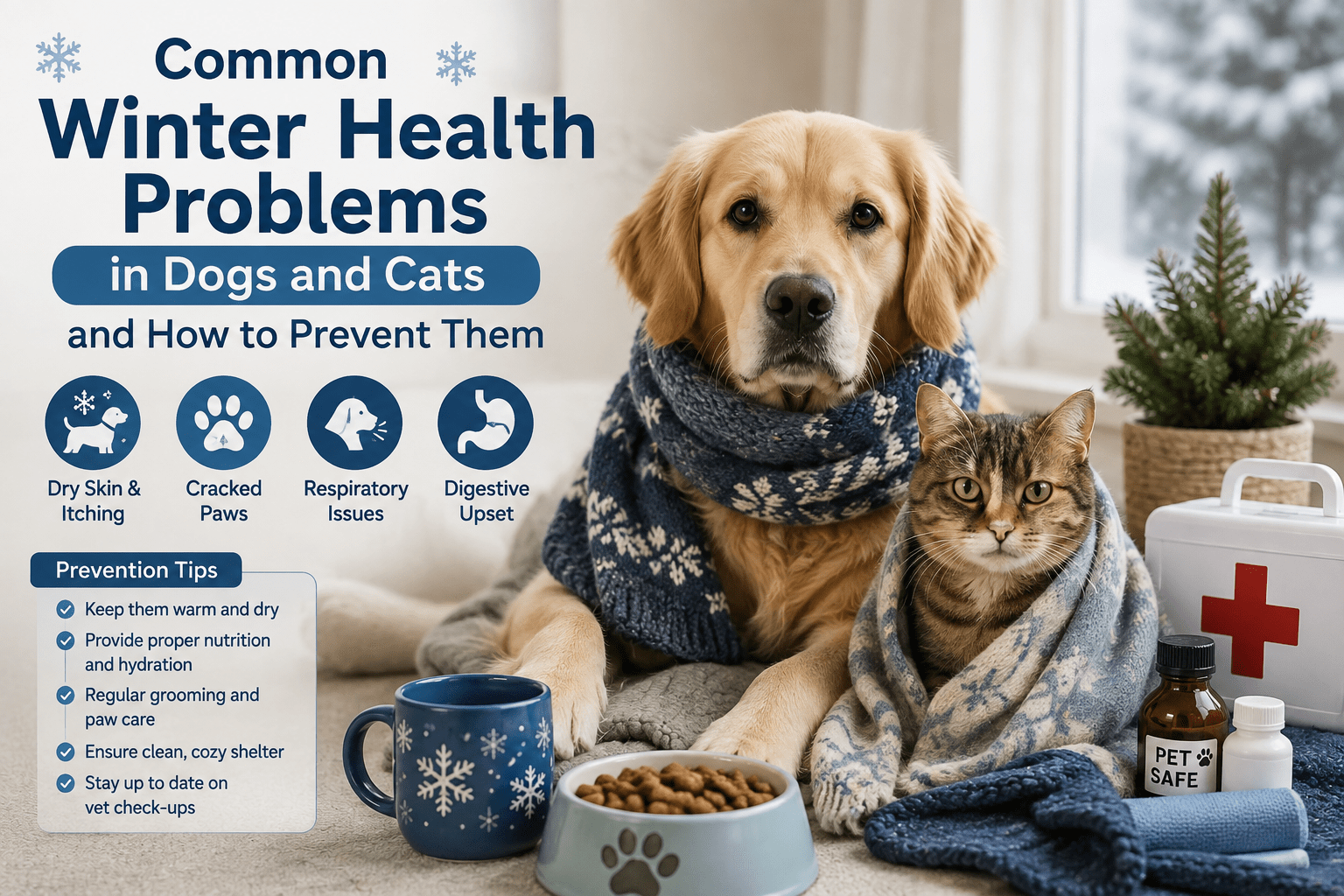
Winter can be a wonderful season for pets and their families. Dogs may enjoy brisk walks, while cats often spend more time curled up in warm and comfortable places. However, colder temperatures, dry indoor air, snow, ice, road salt, and winter chemicals can create health risks that are easy to overlook.
Cold weather does not affect every pet in the same way. Puppies, kittens, senior pets, small breeds, short-haired dogs, and pets with certain health conditions may be less able to tolerate low temperatures. Even pets with thick coats can develop problems if they remain outside for too long. The American Animal Hospital Association notes that all dogs and cats can be vulnerable to freezing temperatures, including pets with heavy coats.
The good news is that many winter health problems in dogs and cats can be prevented with simple changes to daily care. Knowing what to watch for and understanding when a problem requires veterinary attention can help keep your pet safe throughout the colder months.
Why Winter Can Be Hard on Dogs and Cats
Cold weather affects pets in several ways. Low temperatures can reduce body warmth, while wind and wet fur can make an animal feel colder. Snow, ice, salt, and de-icing products can also irritate paws or cause illness if they are swallowed.
Indoor pets are not completely protected either. Dry indoor air can contribute to itchy or flaky skin, while reduced outdoor activity can affect exercise and weight management. Winter also brings certain hazards, such as antifreeze, that may be more common around homes and vehicles.
A pet’s age, size, coat type, health, and normal activity level all matter when deciding how much cold exposure is appropriate.
Hypothermia in Dogs and Cats
Hypothermia occurs when a pet’s body temperature becomes dangerously low. It can develop when a dog or cat remains outside in cold conditions for too long, particularly when the animal is wet or exposed to wind.
Early signs may include shivering, weakness, tiredness, difficulty walking, or unusual behavior. As hypothermia becomes more severe, a pet may become very weak, confused, or unresponsive.
How to Prevent Hypothermia
The safest approach is to limit outdoor exposure when temperatures are very low. Short-haired dogs, puppies, kittens, older pets, and small animals may need even less time outdoors than healthy adult animals.
During particularly cold weather, take dogs outside for shorter walks rather than allowing long periods of outdoor activity. Cats should generally be kept indoors during severe cold. A warm, dry sleeping area away from drafts is also important.
Do not assume that a thick coat makes a pet immune to the cold. Every animal has a limit, and conditions such as wind, wet weather, and freezing temperatures can increase the risk.
Frostbite and Cold-Related Injuries
Frostbite develops when body tissues are damaged by extreme cold. Areas with less natural protection, including the ears, tail, nose, and paws, can be particularly vulnerable.
A pet with frostbite may have skin that appears unusually pale, gray, or bluish. The affected area may also become painful, swollen, or unusually cold to the touch. In serious cases, tissue damage can occur.
Protecting Your Pet From Frostbite
Avoid keeping dogs or cats outside for extended periods during freezing conditions. Check paws, ears, and other exposed areas after outdoor time, particularly following walks in snow or icy weather.
If you suspect frostbite, contact a veterinarian promptly rather than attempting to treat severe tissue damage at home. Veterinary assessment is important because the full extent of cold injury may not be immediately visible.
Dry, Itchy Skin During Winter
Dry skin is one of the more common winter problems affecting pets. Cold outdoor air combined with dry indoor heat can remove moisture from the skin. Frequent bathing can make the problem worse by removing natural oils from the coat and skin.
A dog or cat with dry skin may scratch more often, develop flakes, or have a dull-looking coat. Some pets may lick or chew areas that feel irritated.
How to Prevent Dry Skin in Pets
Avoid unnecessary baths during cold spells and use pet-safe products recommended by your veterinarian when bathing is necessary. Make sure your pet has access to fresh water throughout the day, even if they seem to drink less during cold weather.
Keeping the home comfortably humidified can also help reduce the drying effect of indoor heating. After a wet walk, dry your dog thoroughly instead of allowing damp fur to remain against the skin. The ASPCA recommends towel-drying pets after they come indoors and paying particular attention to the feet and areas between the toes.
Persistent itching, redness, hair loss, sores, or recurring skin problems should be discussed with a veterinarian because these signs can have causes other than winter dryness.
Cracked and Irritated Paw Pads
Winter walks can be particularly hard on a dog’s paws. Snow and ice can cause irritation, while road salt and de-icing chemicals can dry or damage paw pads. Small pieces of ice may also become trapped between the toes.
A dog may suddenly start licking its paws, limping, refusing to walk, or repeatedly lifting one foot when the pads become irritated.
How to Protect Dog Paws in Winter
Check your dog’s paws after every winter walk. Wash or wipe away salt, ice, and other substances before your dog has a chance to lick them. Dry the paws carefully, including between the toes.
Some dogs can benefit from properly fitted booties, while a veterinarian-approved paw balm or protectant may provide another layer of protection. Introduce booties gradually so your dog has time to become comfortable wearing them.
If the pads become cracked, bleed, swell, or remain painful, stop outdoor activity and contact your veterinarian.
The ASPCA specifically recommends cleaning pets’ feet after walks and checking for cracks in the paw pads or redness between the toes.
Salt and Ice Melt Poisoning
Ice-melting products create another winter health concern. Dogs may walk through treated areas and later lick their paws. Some pets may also eat snow containing de-icing chemicals.
Depending on the ingredients and amount consumed, ice melts can cause vomiting, diarrhea, stomach irritation, dehydration, or more serious problems. High levels of sodium can be particularly dangerous.
Keep bags and containers of ice melt securely out of your pet’s reach. When possible, use products labelled as safer for pets, but remember that even products marketed as pet-friendly should not be eaten.
After walks, clean your dog’s paws before allowing normal licking and grooming.
Antifreeze Poisoning in Dogs and Cats
Antifreeze is one of the most serious winter hazards for pets. Products containing ethylene glycol are highly toxic, and even a small amount can potentially be fatal. Pets may be attracted to spills because the substance can have a sweet taste.
Antifreeze can leak from vehicles or spill during maintenance. Because cats and dogs are naturally curious, even a small puddle in a garage, driveway, or parking area can create a serious risk.
Store antifreeze securely and clean up spills immediately. Never allow pets to investigate puddles or containers containing automotive fluids.
If you think your dog or cat has swallowed antifreeze, treat it as an emergency. Do not wait for obvious symptoms to appear. Contact a veterinarian or emergency veterinary hospital immediately because early treatment is extremely important.
Respiratory Problems and Winter Weather
Cold, dry air can irritate the airways of some pets, particularly animals that already have respiratory conditions. Indoor heating can also make the air dry, which may contribute to coughing or discomfort in sensitive animals.
Winter respiratory symptoms should not automatically be blamed on the weather. Persistent coughing, nasal discharge, difficulty breathing, unusual tiredness, or changes in appetite can indicate an infection or another health problem.
Keep your pet away from smoke and other airborne irritants, maintain good indoor air quality, and avoid unnecessary exposure to very cold air. If breathing becomes difficult or your pet appears distressed, seek veterinary care promptly.
Arthritis and Joint Pain in Cold Weather
Cold weather can make existing joint problems more noticeable, especially in older dogs and cats. A pet with arthritis may become stiff after resting, hesitate before climbing stairs, avoid jumping onto furniture, or show less interest in exercise.
Cats can be particularly difficult to assess because they often hide discomfort. A cat that suddenly stops jumping onto its favourite chair or becomes less active may be experiencing pain rather than simply becoming lazy.
Making Winter More Comfortable for Pets With Joint Problems
Provide a warm, comfortable bed in an easily accessible location. Older pets may benefit from beds that are supportive and positioned away from cold drafts. Keep food, water, and litter boxes where the animal can reach them without navigating slippery surfaces or stairs.
Regular gentle movement can help maintain mobility, but exercise should be appropriate for the pet’s age and physical condition. Talk to your veterinarian if your pet develops new stiffness, limping, or difficulty moving.
Maintaining a healthy body weight is also important because excess weight puts additional stress on joints.
Reduced Exercise and Winter Weight Gain
When temperatures drop, many pets spend more time indoors. Dogs may have shorter walks, while cats may sleep more and play less. If food portions and treats remain the same while activity decreases, weight gain can occur.
Extra weight can increase the risk of joint problems and make existing health conditions harder to manage.
Instead of relying entirely on outdoor exercise, provide indoor activities. Dogs can play with toys, practise basic commands, or use food puzzles. Cats may benefit from interactive toys, climbing areas, and short play sessions throughout the day.
Do not automatically increase your pet’s food simply because it is winter. Some animals that spend a great deal of time outdoors may require additional calories, but indoor pets often do not. Feeding amounts should be based on the individual animal’s age, activity level, body condition, and health.
Seasonal Changes in Water Intake
Pets may appear less thirsty during cold weather, but they still need regular access to clean water. Dry indoor air and heated homes can contribute to moisture loss, while some pets may drink less simply because their routine has changed.
Check your pet’s water bowl regularly and make sure the water remains fresh. If your dog or cat suddenly starts drinking substantially more or less than usual, pay attention to the change.
A noticeable change in thirst can sometimes be a sign of an underlying health problem rather than a simple seasonal adjustment.
How to Keep Dogs and Cats Safe During Winter Walks
Winter walks should be adjusted according to weather conditions and your pet’s needs. Keep dogs on a leash around snow and ice, particularly during storms or in unfamiliar areas. Snow can make it difficult for dogs to follow familiar scents, increasing the chance of becoming lost.
Before leaving home, check the walking route for slippery surfaces, deep snow, ice, and areas treated with chemicals. Avoid frozen ponds and other bodies of water because ice may not be strong enough to support an animal.
A properly fitted coat can be useful for some short-haired or cold-sensitive dogs. However, clothing should never replace sensible limits on time spent outside.
After the walk, inspect the paws, dry wet fur, and remove any snow or ice caught around the feet.
Winter Safety Tips for Indoor Cats
Indoor cats still need protection from winter hazards. Keep antifreeze, de-icing chemicals, and other household products stored securely. Check garages, sheds, and storage areas for spills before allowing pets access.
Cats sometimes seek warmth around vehicles, especially when temperatures fall. If outdoor cats are known to shelter near parked cars, check around and underneath the vehicle before starting the engine.
Inside the home, provide a warm resting area away from drafts and heating equipment that could cause burns. Keep candles, heaters, fireplaces, and electrical cords away from curious pets.
When Should You Call a Veterinarian?
Knowing when a winter problem needs professional attention is an important part of pet care. Contact a veterinarian if your dog or cat develops symptoms that are severe, sudden, persistent, or clearly different from normal behavior.
Seek prompt veterinary care for signs such as difficulty breathing, extreme weakness, collapse, severe vomiting or diarrhea, persistent limping, significant pain, suspected poisoning, or possible frostbite or hypothermia.
Suspected antifreeze ingestion should always be treated as an emergency because serious internal damage can occur before the signs become obvious.
A Simple Winter Routine for Healthier Pets
Good winter care does not have to be complicated. Before outdoor activity, consider the temperature, wind, precipitation, and your pet’s individual needs. During the outing, watch for signs that your pet is becoming too cold or uncomfortable.
When you return home, clean and dry the paws, check between the toes, and dry wet fur. Throughout the season, monitor appetite, weight, activity, skin condition, drinking habits, and general behavior.
These small habits can make it easier to notice changes early and prevent minor seasonal problems from becoming more serious.
Conclusion
Winter health problems in dogs and cats are often preventable when pet owners understand the risks and pay attention to changes in their animals. Hypothermia, frostbite, dry skin, irritated paws, chemical exposure, poisoning, joint discomfort, and reduced activity can all become concerns during colder months.
The most important step is to consider your individual pet rather than relying on a single temperature or rule. A young, healthy dog may tolerate conditions differently from a senior cat or a short-haired puppy. Keep outdoor time appropriate, provide a warm indoor environment, clean paws after winter walks, and keep dangerous chemicals securely stored.
Most importantly, do not ignore unusual symptoms. When something seems wrong, early veterinary advice can make a significant difference. With thoughtful preparation and daily attention, dogs and cats can stay comfortable, active, and healthy throughout winter.
Frequently Asked Questions About Winter Health Problems in Dogs and Cats
What are the most common winter health problems in dogs and cats?
Common winter concerns include hypothermia, frostbite, dry and itchy skin, cracked paw pads, irritation from road salt, ice melt exposure, antifreeze poisoning, joint stiffness, and reduced exercise. The risks vary depending on the pet’s age, breed, coat, health, and amount of outdoor exposure.
How cold is too cold for a dog?
There is no single temperature that is safe or unsafe for every dog. Small dogs, puppies, senior dogs, short-haired breeds, and dogs with health problems can become uncomfortable or cold more quickly. When temperatures are very low, keep outdoor trips short and monitor your dog closely for shivering, weakness, reluctance to move, or other signs of discomfort.
Can cats get hypothermia?
Yes. Cats can develop hypothermia after prolonged exposure to cold temperatures, especially when they are wet or exposed to wind. Keeping cats indoors during severe cold is one of the safest ways to reduce the risk.
How can I protect my dog’s paws from snow and salt?
Clean and dry your dog’s paws after every winter walk. Check between the toes for ice, redness, and irritation. A properly fitted boot or veterinarian-approved paw protectant can also provide additional protection.
Is antifreeze dangerous to dogs and cats?
Yes. Antifreeze containing ethylene glycol is highly toxic to dogs and cats and can cause life-threatening poisoning. Keep it securely stored, clean up spills immediately, and seek emergency veterinary care if you suspect your pet has ingested any amount.
Should I bathe my pet more often during winter?
Usually, no. Frequent bathing can remove natural oils and contribute to dry, flaky skin. If your pet needs a bath, use a pet-safe product appropriate for the animal and follow veterinary advice, particularly if your pet already has a skin condition.
Do dogs need coats in winter?
Some dogs can benefit from a properly fitted coat, especially short-haired, small, elderly, or cold-sensitive dogs. A coat should provide comfortable coverage without restricting movement. It should not be used as a reason to keep a pet outside for long periods in severe weather.
How can I keep my pet active during winter?
Use indoor play, training exercises, food puzzles, and interactive toys when outdoor exercise is limited. Cats can benefit from short play sessions throughout the day, while dogs can practise obedience skills or play games indoors.
When should I take my pet to the veterinarian during winter?
Contact a veterinarian if your pet has difficulty breathing, severe weakness, persistent vomiting or diarrhea, significant pain, frostbite, suspected hypothermia, poisoning, or a sudden change in normal behavior. Suspected antifreeze ingestion requires immediate veterinary attention.
Can winter weather make arthritis worse in pets?
Cold conditions may make stiffness and discomfort more noticeable in pets that already have joint disease. Providing warm bedding, maintaining a healthy weight, and encouraging appropriate gentle activity can help. New or worsening mobility problems should be discussed with a veterinarian.