


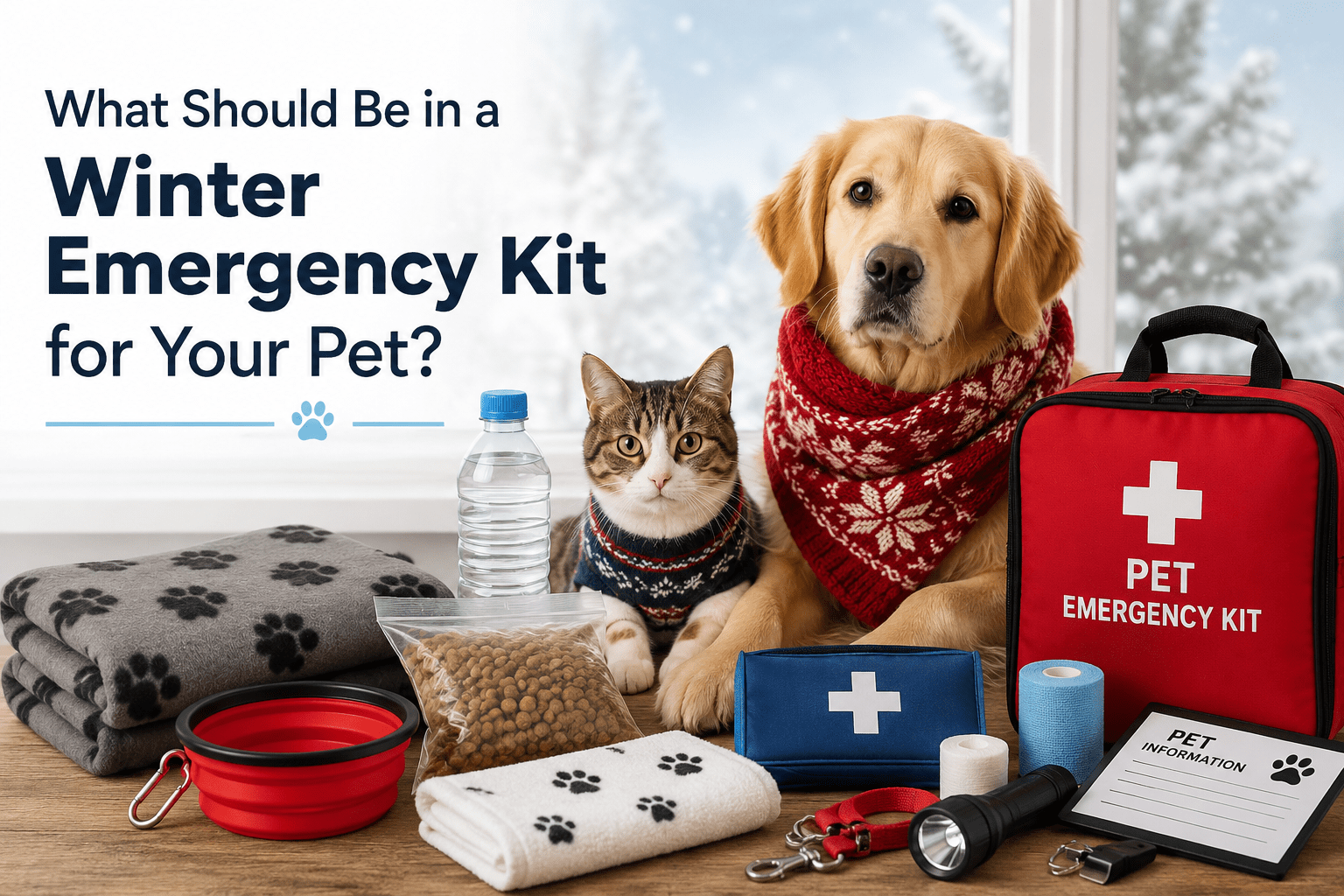
Winter can bring more than cold temperatures. Snowstorms, ice, power outages, road closures, frozen water supplies, and severe weather can quickly make it difficult to care for a dog or cat in the usual way. If you need to leave your home unexpectedly, having the right pet emergency kit already packed can save valuable time.
A winter emergency kit is not simply a bag of food and water. It should contain the supplies your pet needs to stay safe, warm, identifiable, comfortable, and medically supported if your normal routine is interrupted. The kit should also be easy to carry and stored somewhere that every member of the household can find quickly.
The American Society for the Prevention of Cruelty to Animals recommends preparing an emergency or evacuation kit with food, water, medications, medical records, identification supplies, sanitation items, a carrier, and pet first-aid supplies.
The American Veterinary Medical Association similarly recommends keeping animal evacuation supplies in waterproof, easy-to-carry containers and checking food, water, and medications regularly for freshness.
At Petoppia, we believe good pet care includes preparing for the situations that are easy to overlook. Here is what to put in a winter emergency kit for your pet and how to make sure it is actually useful when you need it.
Why Do Pets Need a Winter Emergency Kit?
A winter emergency can happen even when there is no major disaster. A prolonged power outage can leave your home without heat. Heavy snow or ice can prevent you from travelling to a veterinary clinic or pet store. A burst pipe, house problem, severe storm, or evacuation order can mean that you and your pet need to leave quickly.
Pets also have specific needs that cannot always be met with ordinary household supplies. A dog may need a leash, food, medication, and a warm blanket. A cat may need a carrier, litter, and familiar bedding to remain calm in an unfamiliar environment.
Preparing these supplies before an emergency means you are not searching for them while dealing with stressful conditions.
What Should Be in a Pet Emergency Kit?
A useful winter pet emergency kit should cover five basic needs: food and water, warmth and shelter, health and first aid, identification and records, and safe transportation. You can keep everything together in one large waterproof container or use a main emergency bag with a few larger items stored beside it.
The exact supplies will depend on your pet. A dog that takes daily medication will need different supplies from a healthy young cat. Consider your pet’s age, health, size, diet, medication, and normal routine when preparing the kit.
1. Food and Fresh Water
Food and water should be at the top of your pet emergency checklist. During a winter emergency, you may not be able to reach a store or your normal food supply.
Keep several days of your pet’s usual food in an airtight, waterproof container. The ASPCA currently recommends planning for at least seven to ten days of food and bottled water for each pet in a disaster kit.
Using your pet’s regular food is generally preferable to suddenly introducing a different diet during an already stressful situation. Store dry food securely, and remember that canned food may require a manual can opener if it does not have a pull tab.
Include food and water bowls that your pet already uses or is comfortable with. For travel, lightweight bowls can make the kit easier to carry.
Water is particularly important during winter because cold weather does not eliminate your pet’s need for hydration. Store bottled water and replace supplies according to their storage recommendations.
2. Extra Pet Medications
If your dog or cat takes prescription medication, include an extra supply in the emergency kit. An emergency may prevent you from reaching your veterinarian or pharmacy when your pet’s next dose is due.
Keep medication in its original labelled packaging whenever possible. Include instructions showing the medication name, dosage, and frequency. The AVMA recommends keeping medication information with veterinary and pharmacy contact details so that replacement medication can be obtained if necessary.
Do not assume that medication stored in an emergency bag will remain usable indefinitely. Check expiration dates regularly and follow any storage requirements, especially for medicines that need refrigeration.
If your pet requires refrigerated medication, speak with your veterinarian about how to manage it during a power outage or evacuation.
3. A Pet First Aid Kit
A pet first aid kit can help you deal with minor injuries while you arrange professional veterinary care. It should not be treated as a substitute for veterinary treatment when an animal is seriously injured or ill.
A basic pet first aid kit can include sterile gauze, adhesive tape, bandages, disposable gloves, blunt-ended scissors, tweezers, towels, saline eye solution, and other supplies recommended by your veterinarian. The ASPCA also recommends keeping veterinary and emergency clinic contact information with the first aid supplies.
It is important to know how to use anything you put in the kit. A first aid item is not helpful if you are unsure whether it is safe for your pet.
Avoid giving human medications unless a veterinarian specifically tells you to do so. Some common medicines that are safe for people can be dangerous or even toxic to dogs and cats.
4. Warm Blankets and Bedding
Warmth becomes especially important during winter emergencies. If the heating stops working or you need to leave your home, your pet may need additional insulation.
Pack one or two warm blankets that are easy to carry. A familiar blanket or piece of bedding can also help reduce stress because it carries a familiar scent.
The goal is to provide a dry, comfortable place where your pet can rest. Do not place bedding directly against unsafe heating equipment, fireplaces, or other sources of extreme heat.
If your pet is particularly sensitive to cold, consider adding a properly sized winter coat for outdoor travel. Clothing should fit comfortably and should never be used as a reason to leave a pet outside for an extended period.
5. Collar, Identification Tags, and Leash
An emergency can frighten even a calm dog or cat. Loud noises, unfamiliar surroundings, and people coming and going can cause pets to run away.
Keep a spare collar, identification tag, and leash in your pet emergency kit. For dogs, include a secure leash or harness. Cats should have a secure carrier rather than being carried outside without protection.
The ASPCA recommends keeping identification information current and ensuring that pets are microchipped. It also recommends writing contact information on the pet’s carrier.
Check your pet’s identification details regularly. A phone number that is no longer active or an outdated address can make it much harder to reunite with a lost pet.
6. Veterinary Records and Important Documents
Keep copies of your pet’s important medical information in the emergency kit. A waterproof folder or sealed bag can protect paper documents from snow, rain, spilled water, or other damage.
Useful information includes vaccination records, medical history, medication details, microchip information, your veterinarian’s contact information, and records of important medical conditions.
The ASPCA recommends keeping copies of veterinary records and other important information both digitally and in a waterproof physical format.
A recent photograph of your pet is also useful. If your pet becomes separated from you, a current photograph can help with identification and missing-pet notices.
7. A Sturdy Carrier or Travel Crate
Every pet should have a safe way to travel during an emergency. For cats, a secure carrier is especially important because frightened cats can easily escape from your arms.
Dogs may need a crate, carrier, or secure vehicle restraint depending on their size and circumstances. Label the carrier with your name, telephone number, and your pet’s information.
Keep the carrier somewhere accessible rather than buried in a storage area. The ASPCA advises keeping carriers and emergency supplies close to an exit so they can be reached quickly.
If your pet dislikes the carrier, practise using it before an emergency. A carrier that is familiar is much less stressful than one that appears for the first time during a crisis.
8. Winter Paw and Cleaning Supplies
Snow, ice, salt, and other materials used on roads and sidewalks can irritate your pet’s paws. If your dog needs to go outside during a winter emergency, include supplies for cleaning and drying the feet.
Pack several towels, pet-safe wipes, and disposable waste bags. For dogs that regularly wear winter boots, keep an extra pair in the emergency supplies.
After outdoor exposure, check between the toes and around the paw pads. Remove ice and clean away substances that your pet could later lick.
For cats, sanitation supplies should include litter and a litter tray. The ASPCA recommends disposable litter trays or similar options as part of a pet evacuation kit.
9. Sanitation Supplies
Good hygiene can become difficult during an emergency, particularly if you are staying somewhere unfamiliar.
Include disposable bags, paper towels, cleaning wipes, and other basic cleaning supplies that are safe to use around animals. Dogs may need puppy pads in certain situations, while cats will need enough litter to maintain a familiar bathroom routine.
Do not rely on finding these supplies after an emergency begins. Stores may be closed, roads may be blocked, and emergency shelters may have limited pet supplies.
10. Your Pet’s Comfort Items
An emergency can be frightening for animals. A familiar toy, blanket, bed, or chew toy can provide some normality when your pet is surrounded by unfamiliar sounds, people, and places.
Choose one or two items rather than filling the emergency bag with unnecessary belongings. The aim is to make the kit practical while still giving your pet something familiar.
The ASPCA specifically recommends including familiar toys or bedding because these items can help pets cope with stressful emergency situations.
11. Flashlight and Backup Power
A winter power outage can leave you dealing with darkness as well as cold. Keep a flashlight and spare batteries in or next to the pet emergency kit.
A portable phone charger can also be valuable. Your phone may be needed to contact your veterinarian, check weather alerts, locate an open emergency clinic, or contact family members.
Keep important pet information accessible offline as well. Do not rely entirely on an internet connection that may not be available during a power or network outage.
12. A List of Emergency Contacts
Your emergency kit should contain more than physical supplies. Keep a printed list of important contacts in a waterproof sleeve.
Include your regular veterinarian, the nearest emergency veterinary hospital, local animal control, pet boarding facilities, and several trusted people who could care for your pet if you are unable to do so.
It is also worth researching pet-friendly hotels and other temporary accommodation options before winter emergencies occur. Not every emergency shelter accepts animals, so having alternatives prepared can make evacuation easier.
How to Prepare a Winter Emergency Kit for Multiple Pets
If you have more than one pet, avoid assuming that one shared kit will meet everyone’s needs. Keep enough food, water, medication, and identification supplies for every animal.
Each pet should have its own carrier when appropriate. You should also keep individual medical information because pets may have different medications, diets, allergies, and health concerns.
Label each pet’s supplies clearly. This can save time when you are tired, stressed, or working in low light.
Where Should You Store a Pet Emergency Kit?
Store the kit somewhere cool, dry, and easy to reach. A location near an exit can be practical because you may need to leave quickly.
Everyone who lives in the home should know where the kit is located. If one person is away when an emergency occurs, another family member should still be able to find the supplies.
Avoid storing the kit somewhere that could become inaccessible during a winter emergency, such as a detached shed that may be difficult to reach through heavy snow.
How Often Should You Check a Pet Emergency Kit?
A pet emergency kit is only useful if its contents are safe and usable. Check it every few months and whenever your pet’s needs change.
Look at food and medication expiration dates, replace batteries, inspect carriers and leashes, and make sure identification information is current. Replace clothing or bedding if it has become damaged or too small.
The ASPCA advises rotating food, water, and medications so that supplies remain fresh and usable.
It is also a good idea to review the kit after every winter. You may notice that certain items were unnecessary while another item was missing. Use that experience to improve the kit before the next cold season.
What to Do if a Winter Emergency Happens
When severe winter weather is approaching, bring pets indoors and keep them with you. Do not wait until conditions become dangerous to decide what to do.
If authorities recommend evacuation, take your pets with you rather than leaving them behind. Identify your pet-friendly destination before travelling and bring the emergency kit, carrier, medications, records, food, and water.
If your pet shows signs of hypothermia, frostbite, poisoning, serious injury, difficulty breathing, or another potentially dangerous condition, contact a veterinarian or emergency veterinary hospital immediately. A first aid kit can help while you seek professional care, but it should not delay treatment.
Winter Emergency Kit Checklist for Dogs and Cats
A practical winter emergency kit can include:
- Food for at least seven to ten days
- Bottled water
- Food and water bowls
- Manual can opener
- Required medications
- Pet first aid supplies
- Warm blankets or familiar bedding
- Spare collar and identification tag
- Leash or harness
- Secure carrier or crate
- Veterinary and vaccination records
- Microchip information
- Recent photograph
- Litter and litter tray for cats
- Waste bags and cleaning supplies
- Towels and paw-cleaning supplies
- Familiar toy
- Flashlight and spare batteries
- Portable phone charger
- Printed emergency contact list
Your pet may need additional items based on age, health, diet, or mobility. Ask your veterinarian what should be added for your individual animal.
Final Thoughts
Preparing a winter emergency kit for your pet may seem unnecessary when the weather is calm, but that is exactly when it is easiest to do. Once a winter storm, power outage, evacuation, or other emergency begins, there may be little time to gather everything your dog or cat needs.
Keep the kit accessible, include enough supplies for each pet, and review it throughout the year. Most importantly, tailor the contents to your pet rather than relying on a generic emergency bag.
A little preparation can make a difficult situation much easier. When your pet’s food, medication, identification, medical information, carrier, warmth, and comfort items are already ready to go, you can focus on keeping your companion calm and safe when it matters most.
Frequently Asked Questions About Winter Emergency Kits for Pets
What is the most important item in a pet emergency kit?
There is not one item that is more important in every situation. Food, water, medication, identification, safe transportation, medical records, and first aid supplies all serve different purposes. Your pet’s specific health needs should determine which items receive the most attention.
How much food should I keep in a pet emergency kit?
The ASPCA recommends keeping at least seven to ten days of food for each pet in a disaster preparedness kit. Store food properly and rotate it regularly so that it remains fresh.
How much water does my pet need in an emergency?
Keep enough bottled water for your pet as part of the household emergency supply. The amount your pet needs depends on species, size, diet, activity, and health. It is better to prepare more than you expect to use if you may be unable to access fresh water.
Should I include human medicine in my pet’s emergency kit?
Do not give human medication to your pet unless your veterinarian specifically instructs you to do so. Many medicines that are commonly used by people can be harmful to dogs and cats.
Does my cat need a carrier in a winter emergency kit?
Yes. A secure carrier is one of the most useful items for transporting a cat safely. Keep it accessible and label it with your contact information.
What should I put in a pet first aid kit?
Basic supplies can include sterile gauze, adhesive tape, disposable gloves, blunt-ended scissors, tweezers, towels, and other items recommended by your veterinarian. You should also keep your veterinarian’s contact information with the kit.
Should I keep my pet’s medical records in the emergency kit?
Yes. Keep copies of important veterinary records, medication information, vaccination records, and microchip details in a waterproof container. A digital copy on your phone can provide additional backup.
How can I keep my pet warm during a power outage?
Keep your pet indoors in a warm, dry area away from drafts. Use blankets and familiar bedding for additional comfort. Never use unsafe heating methods or leave a pet unattended near a heater, fireplace, candle, or other heat source.
How often should I replace items in a pet emergency kit?
Check the kit every few months. Replace expired food and medication, refresh water according to its storage guidance, replace batteries, and update medical records and contact information whenever something changes.