


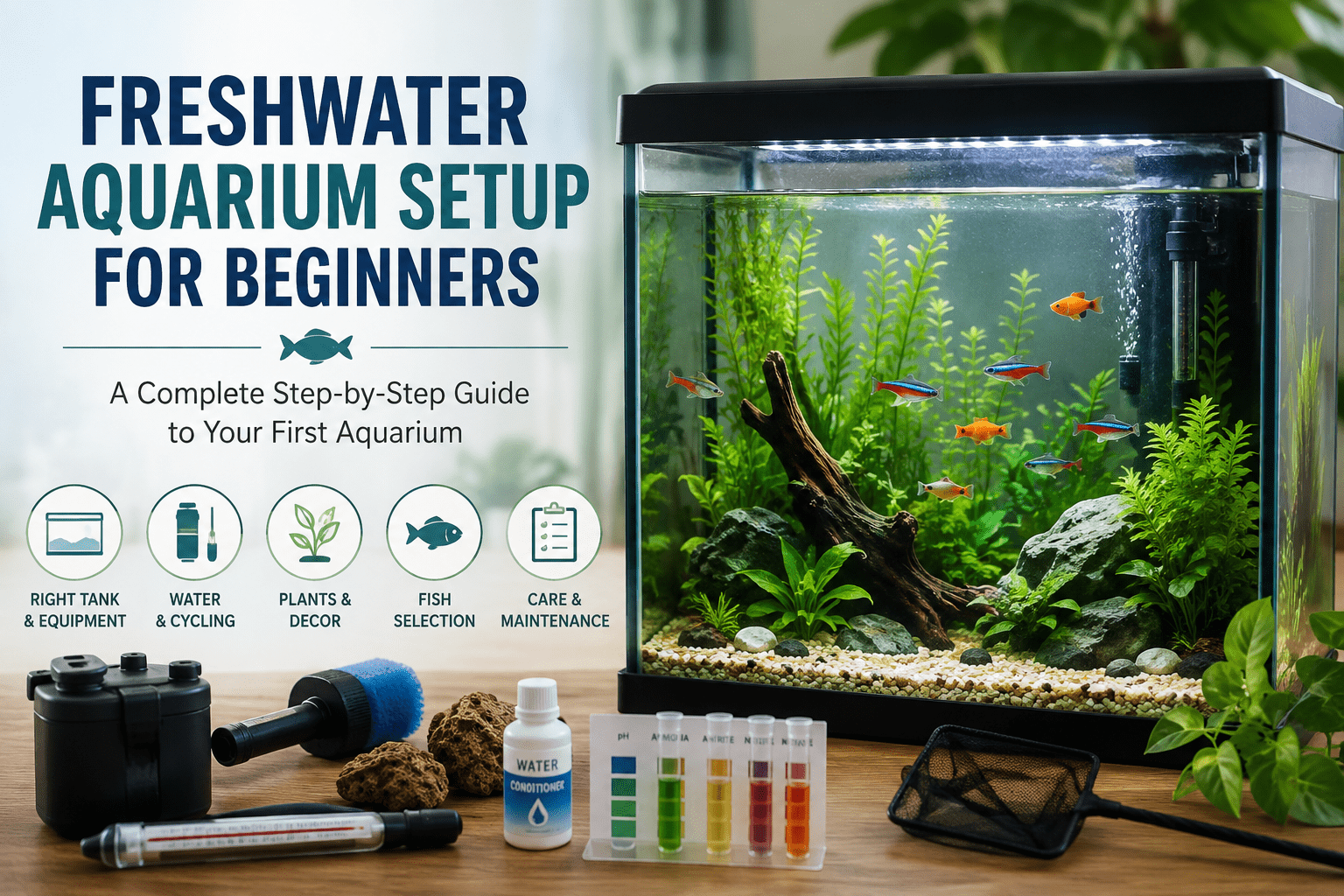
Setting up a freshwater aquarium for the first time can be exciting, but the healthiest aquarium is not created by simply filling a tank with water and adding fish. A freshwater aquarium is a small living environment that needs the right balance of water quality, filtration, temperature, space, and suitable inhabitants.
For beginners, the most important lesson is to take the process slowly. Choosing an appropriate aquarium, preparing the water correctly, allowing beneficial bacteria to establish, and selecting compatible fish will give your aquarium a much better start. A little patience during the first few weeks can prevent many of the problems that new fish keepers commonly face.
This freshwater aquarium setup guide explains how to set up a beginner fish tank from the ground up, including equipment, water preparation, aquarium cycling, fish selection, plants, feeding, and routine maintenance.
Choose the Right Freshwater Aquarium
The aquarium itself should be the first decision. It is tempting to choose a very small tank because it appears easier to manage, but smaller volumes of water can change more quickly when something goes wrong. A larger aquarium generally provides more stable water conditions and gives beginners more room to correct small mistakes.
For many beginners, a tank around 20 gallons or larger can be a practical starting point if the available space and budget allow it. The exact size should depend on the fish you plan to keep because different species have different space requirements.
Tank shape also matters. A wider aquarium provides more swimming space and a larger water surface for gas exchange than a tall, narrow aquarium of similar volume. The RSPCA freshwater fish care guide also recommends choosing a suitably sized aquarium and avoiding decorative bowls that do not provide an appropriate environment for fish.
Before buying a tank, think about the adult size, activity level, social behavior, and water requirements of the fish you want. Choosing the fish first can make it much easier to choose an appropriate aquarium rather than trying to fit fish into a tank you already own.
Decide Where to Place the Fish Tank
A freshwater aquarium can become surprisingly heavy once it is filled with water, gravel, decorations, and equipment. Place it on a sturdy, level stand that is designed to support the aquarium’s weight.
Avoid placing the tank directly beside a sunny window. Direct sunlight can contribute to excessive algae growth and can cause unwanted temperature changes. Keep the aquarium away from radiators, heating vents, air-conditioning vents, exterior doors, and other locations where temperatures fluctuate significantly. (Aqueon)
Choose a location where you can easily access an electrical outlet and perform water changes. Leave enough space behind the aquarium for filter equipment, tubing, and electrical cords.
Essential Freshwater Aquarium Equipment
A beginner aquarium does not need every accessory available at a pet store. Focus on equipment that supports the basic needs of the fish and the stability of the aquarium.
The essential equipment usually includes:
- An appropriately sized aquarium and sturdy stand
- A suitable filter
- An aquarium heater for species that require warm water
- A thermometer
- Aquarium lighting
- A secure lid or cover
- Suitable substrate such as aquarium gravel or sand
- Water conditioner
- A water testing kit
- A bucket reserved for aquarium use
- An algae scraper and gravel vacuum
The filter is particularly important because it helps remove waste and provides a surface where beneficial bacteria can grow. Filtration also helps circulate water throughout the aquarium.
If you keep tropical freshwater fish, you will generally need a heater with a thermostat. The correct temperature depends on the species rather than a universal setting. The RSPCA recommends researching the temperature requirements of the particular fish being kept and using a thermometer to monitor the aquarium. (RSPCA)
Prepare the Substrate and Decorations
Before adding gravel or sand, rinse it thoroughly with plain water. Do not use soap, household cleaners, or other cleaning products because residues can harm fish.
Substrate does more than improve the appearance of a fish tank. It also provides surfaces where beneficial microorganisms can live.
Decorations should serve a purpose as well as look attractive. Plants, driftwood, rocks, and other aquarium-safe structures can create hiding areas and help fish feel more secure. Arrange taller decorations toward the back and leave enough open space for fish to swim.
Check rocks, ornaments, and driftwood carefully before putting them into the aquarium. Everything added to the tank should be aquarium-safe and free from chemicals, sharp edges, or substances that could alter the water in an unwanted way.
Add Water Safely
Once the substrate and decorations are in place, add tap water that has been treated with an appropriate water conditioner. Tap water may contain chlorine or chloramine used during municipal water treatment, so untreated tap water should not be added directly to an aquarium containing fish.
A simple method is to place a clean plate or similar object on the substrate and pour the water onto it. This reduces the force of the water and helps prevent the substrate from being disturbed.
Do not fill the aquarium completely to the top. Leave enough space to prevent splashing and allow proper placement of the lid and equipment.
After filling the tank, install the filter, heater, thermometer, and other equipment according to the manufacturer’s instructions.
Understand the Aquarium Nitrogen Cycle
The nitrogen cycle is one of the most important concepts for anyone starting a freshwater aquarium.
Fish waste, uneaten food, and decaying plant material produce ammonia. Ammonia is toxic to fish. Beneficial bacteria convert ammonia into nitrite, which is also toxic. Another group of bacteria converts nitrite into nitrate. Nitrate is considerably less harmful, although it can become a problem when it accumulates at high levels. (Aqueon)
This biological process is why a new aquarium cannot be considered ready simply because the filter has been running for a day or two. Establishing the bacteria needed to process waste takes time.
New fish keepers should regularly test ammonia, nitrite, and nitrate while the aquarium becomes established. The only safe target for ammonia and nitrite is zero. Nitrate should also be monitored and controlled through appropriate maintenance and water changes.
A new aquarium can take several weeks to establish a stable biological cycle, and the exact time can vary depending on the setup and how it is managed. Patience is much safer than adding a full population of fish immediately.
Do Not Rush to Add Fish
This is one of the most common mistakes in a beginner fish tank setup.
A newly filled aquarium may look clean and ready, but clear water does not mean that the biological system is established. Adding too many fish at once can produce more waste than the developing bacterial population can process. This can cause dangerous ammonia and nitrite increases, sometimes referred to as new tank syndrome.
Test the water and make sure ammonia and nitrite are at zero before adding fish. Once fish are introduced, continue testing because the biological load changes when new animals are added.
Add fish gradually rather than trying to create a fully stocked community aquarium on the first day. Allow the aquarium to adjust before introducing additional fish.
For readers deciding which species to consider, our guide to low-maintenance fishes for beginners can be a useful next step.
Choose Freshwater Fish Based on Compatibility
The best beginner fish is not necessarily the fish that looks the most attractive in a store. Species have different requirements for temperature, water chemistry, swimming space, diet, group size, and temperament.
Before buying any fish, research:
- Its adult size
- Preferred water temperature
- Whether it needs to live alone or in a group
- Its temperament
- Suitable tank mates
- Feeding requirements
- Minimum recommended aquarium size
- Whether it prefers open swimming areas or hiding places
Avoid choosing fish simply because they are described as “easy.” A fish can be hardy while still having specific social or space requirements.
For example, some schooling species should be kept in appropriate groups rather than individually. Some territorial fish may not be suitable for a peaceful community aquarium. Goldfish also have different space and temperature needs from many tropical freshwater fish, so they should not automatically be treated as a simple beginner option.
Add Live Aquarium Plants When Appropriate
Live plants can make a freshwater aquarium look more natural and provide useful cover for fish. Plants also absorb some nutrients from the water and can contribute to the overall aquarium environment.
Beginners do not need to create a complicated planted aquarium. Hardy plants that tolerate moderate lighting can be a practical starting point. The right choice depends on the fish, substrate, lighting, and level of maintenance you are prepared to provide.
If you use live plants, check their requirements before buying them. Some plants need stronger lighting or additional nutrients, while others can grow well with a simpler setup.
Plants should complement the aquarium rather than replace proper filtration and maintenance.
Set a Sensible Feeding Routine
Feeding seems simple, but overfeeding is one of the easiest ways to create water quality problems.
Give fish only as much food as they can reasonably consume. Uneaten food eventually breaks down and contributes to the aquarium’s waste load. Overfeeding can therefore increase the amount of work required to maintain good water quality.
The appropriate food and feeding frequency depend on the species. Follow feeding guidance for the fish you keep and observe their behavior rather than adding food automatically whenever you walk past the aquarium.
It is better to provide an appropriate amount consistently than to add excessive food because the fish appear interested.
Establish a Simple Aquarium Maintenance Routine
Once the aquarium is established, maintenance becomes much easier when it is performed consistently.
Check the fish every day. Look for changes in swimming, appetite, breathing, body appearance, and interaction with other fish. A fish that suddenly hides, gasps at the surface, stops eating, or behaves unusually may be experiencing a water quality, environmental, or health problem.
Test the aquarium water regularly, particularly when the tank is new or when something appears unusual. Ammonia and nitrite should remain at zero, while nitrate should be kept under control. (Aqueon)
Perform partial water changes as part of your maintenance routine. Use a gravel vacuum when appropriate to remove debris from the substrate, and always treat replacement water before adding it to the aquarium.
Do not completely replace all the water or clean every surface aggressively simply because the tank looks dirty. Beneficial bacteria live on filter media, gravel, decorations, and other surfaces, so preserving the established biological environment is important.
When cleaning filter media, follow the manufacturer’s instructions and avoid using untreated tap water or household cleaning products that could damage beneficial bacteria.
Common Freshwater Aquarium Setup Mistakes to Avoid
Beginners often make the same few mistakes, and most are preventable.
The first is buying fish before understanding their needs. Researching the species before purchasing them helps prevent incompatible combinations and unsuitable tank sizes.
The second is skipping the nitrogen cycle. A filter that has been running for a short period does not automatically mean the aquarium is biologically ready.
The third is overstocking. More fish create more waste and place greater demands on filtration and water quality. A smaller number of well-matched fish is usually easier for a beginner to manage.
Another mistake is changing too many things at once. Fish generally benefit from stable conditions, so sudden changes in temperature or water chemistry can create unnecessary stress.
Finally, avoid treating every aquarium problem with a chemical product before identifying the cause. Test the water first, check the equipment, review feeding habits, and consider whether the aquarium is overstocked.
How Long Does It Take to Set Up a Freshwater Aquarium?
The physical setup can be completed in a day, but a healthy aquarium takes longer to establish.
After adding the substrate, decorations, conditioned water, filter, heater, and lighting, the important work begins. The biological system needs time to develop, and water testing helps determine when the aquarium is ready for fish.
There is no reliable shortcut that makes every new aquarium safe within 24 or 48 hours. The aquarium should be treated as an evolving ecosystem rather than a container that becomes ready on a fixed date.
Final Thoughts on Freshwater Aquarium Setup for Beginners
A successful freshwater aquarium setup is built around stability rather than speed. Choose an appropriate tank, install reliable equipment, condition the water, establish the nitrogen cycle, select compatible fish, and introduce them gradually.
The goal is not simply to create a beautiful aquarium. It is to create an environment in which the fish can live comfortably and receive consistent care. Once the aquarium is established, regular observation, sensible feeding, water testing, and partial water changes can become a simple part of your routine.
For a beginner, patience is one of the most useful aquarium tools you have. Taking the time to understand the environment before adding fish can make the hobby more enjoyable and give your aquatic pets a healthier place to live.
Frequently Asked Questions
What do I need to set up a freshwater aquarium for beginners?
A basic setup requires an appropriately sized aquarium, sturdy stand, filter, heater when required by the fish, thermometer, lighting, substrate, aquarium-safe decorations, water conditioner, and a water testing kit. A gravel vacuum and algae scraper are also useful for routine maintenance.
How long should I wait before adding fish to a new aquarium?
There is no universal number of days that makes a new aquarium safe. The important factor is whether the aquarium has established the biological processes needed to handle fish waste. Test ammonia and nitrite and wait until both are at zero before adding fish. The cycling process can take several weeks or longer. (Aqueon)
Can I set up a fish tank and add fish the same day?
It is better not to add a full population of fish immediately after setting up a new aquarium. The biological system needs time to develop, and adding too many fish before beneficial bacteria are established can lead to dangerous ammonia and nitrite levels.
What size aquarium is best for a beginner?
A larger aquarium is generally more forgiving because water conditions tend to be more stable. A tank around 20 gallons or larger can be a practical starting point for many beginners, but the appropriate size ultimately depends on the species and number of fish you intend to keep. (Aqueon)
Do I need a filter in a freshwater aquarium?
Yes. Proper filtration is a fundamental part of maintaining water quality. The filter supports mechanical and biological filtration and provides surfaces where beneficial bacteria can establish. The RSPCA recommends keeping freshwater fish in aquariums with a properly set-up and maintained filter.
Do freshwater fish need a heater?
Not every freshwater fish needs the same temperature. Tropical species generally require warmer, stable water, while some cold-water species have different requirements. Research the preferred temperature range of the species before deciding whether a heater is necessary.
How often should I test aquarium water?
Testing is especially important during the first several weeks of a new aquarium and whenever fish appear unwell or water conditions change. Regular testing of ammonia, nitrite, and nitrate helps you identify problems before they become severe.
How often should I change freshwater aquarium water?
Partial water changes should be part of routine aquarium maintenance, but the exact frequency depends on the aquarium, stocking level, filtration, plants, and measured water quality. Test results should guide your maintenance rather than relying on a single schedule for every aquarium.
Can beginners keep live plants in a freshwater aquarium?
Yes. Many aquatic plants are suitable for beginners, particularly species that can tolerate the lighting and conditions of a simple aquarium. Plants can provide shelter and absorb some nutrients, but they do not replace filtration, water testing, or regular maintenance.
What is the biggest mistake beginners make when setting up a fish tank?
One of the biggest mistakes is adding too many fish too quickly. A new aquarium needs time to develop beneficial bacteria that process fish waste. Overfeeding, overstocking, and skipping water tests can all contribute to unsafe ammonia and nitrite levels.